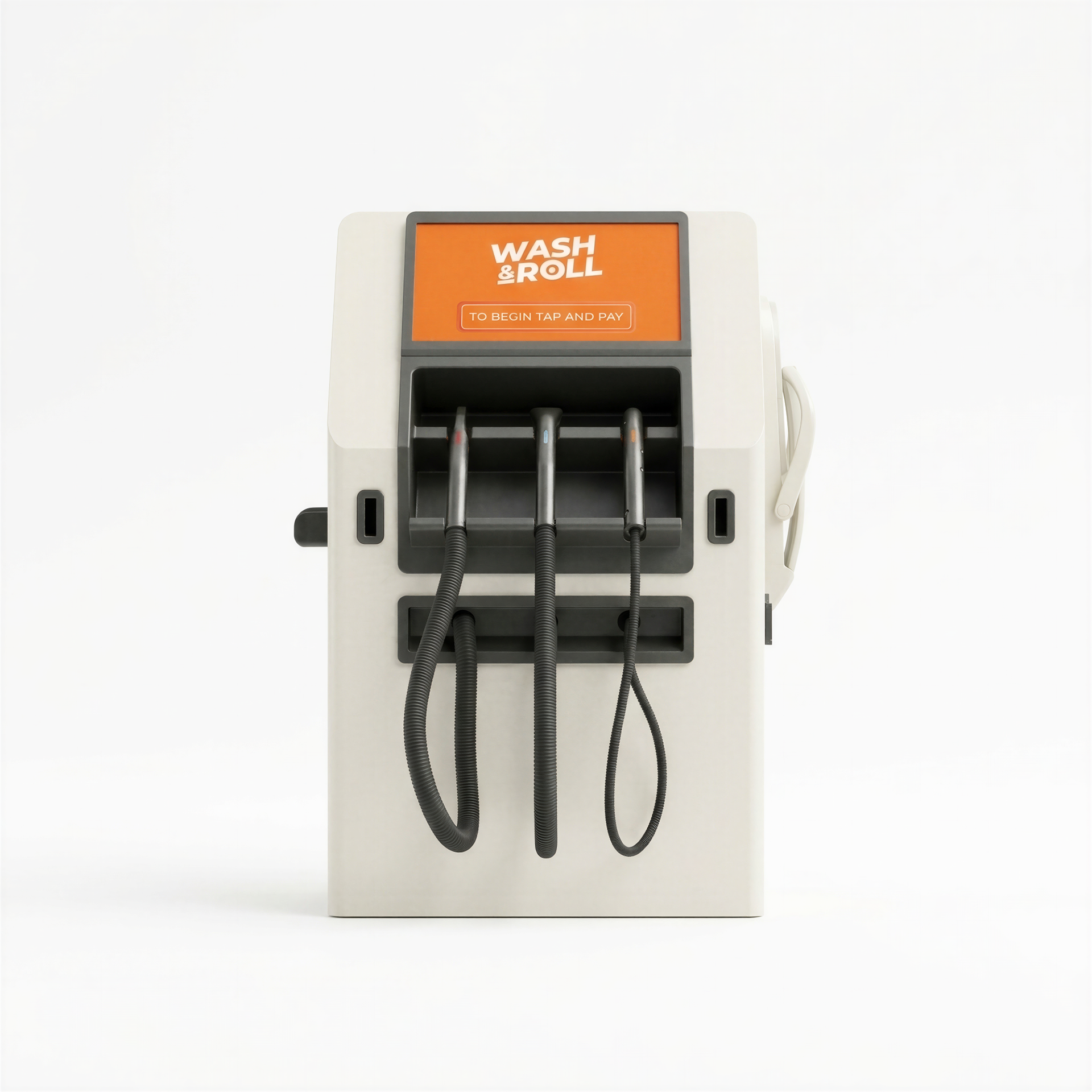
Overview
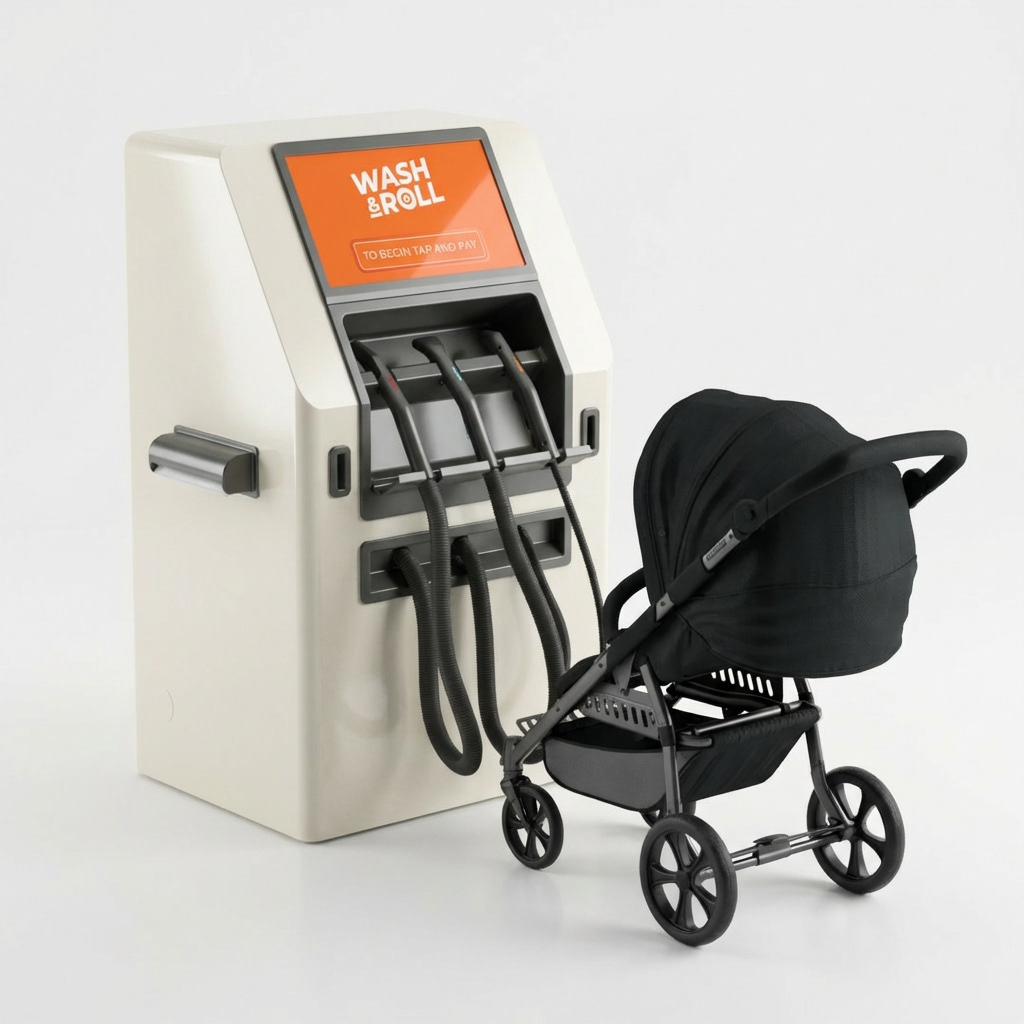
Wash & Roll is a public self-service cleaning station designed to help parents and caregivers clean baby strollers and prams in a faster, easier, and more practical way. The project began from a very direct observation: stroller cleaning is necessary, but in real life it is often delayed, skipped, or handled in inconvenient ways because it takes time, space, and effort.
This project was developed to turn that difficult routine into a clearer and more accessible public-use experience. Rather than treating the machine as only a visual concept, the goal was to build a system that could genuinely support real cleaning behavior, real ergonomic needs, and real use conditions in shared spaces such as malls, daycare centers, playgrounds, and residential facilities.
While the primary use case focuses on baby strollers and prams, the broader service direction also opens possibilities for other wheeled personal-use items such as pet strollers and bicycles. This gave the project a wider relevance and pushed the development beyond a single narrow product scenario.
The Challenge
Cleaning a stroller is more complex than it first appears. It is not just about removing visible dust. A stroller usually combines hard surfaces, tight corners, textile areas, and contact zones that need a better level of hygiene, especially for babies and toddlers.
That means one cleaning method alone is not enough.
The challenge of this project was to integrate different cleaning functions into one compact public-use machine, while still keeping the experience easy to understand, comfortable to operate, and realistic for a first-time user. The machine needed to feel approachable, not technical. It also had to work in public environments where space is limited and where users may still be carrying a child while using it.
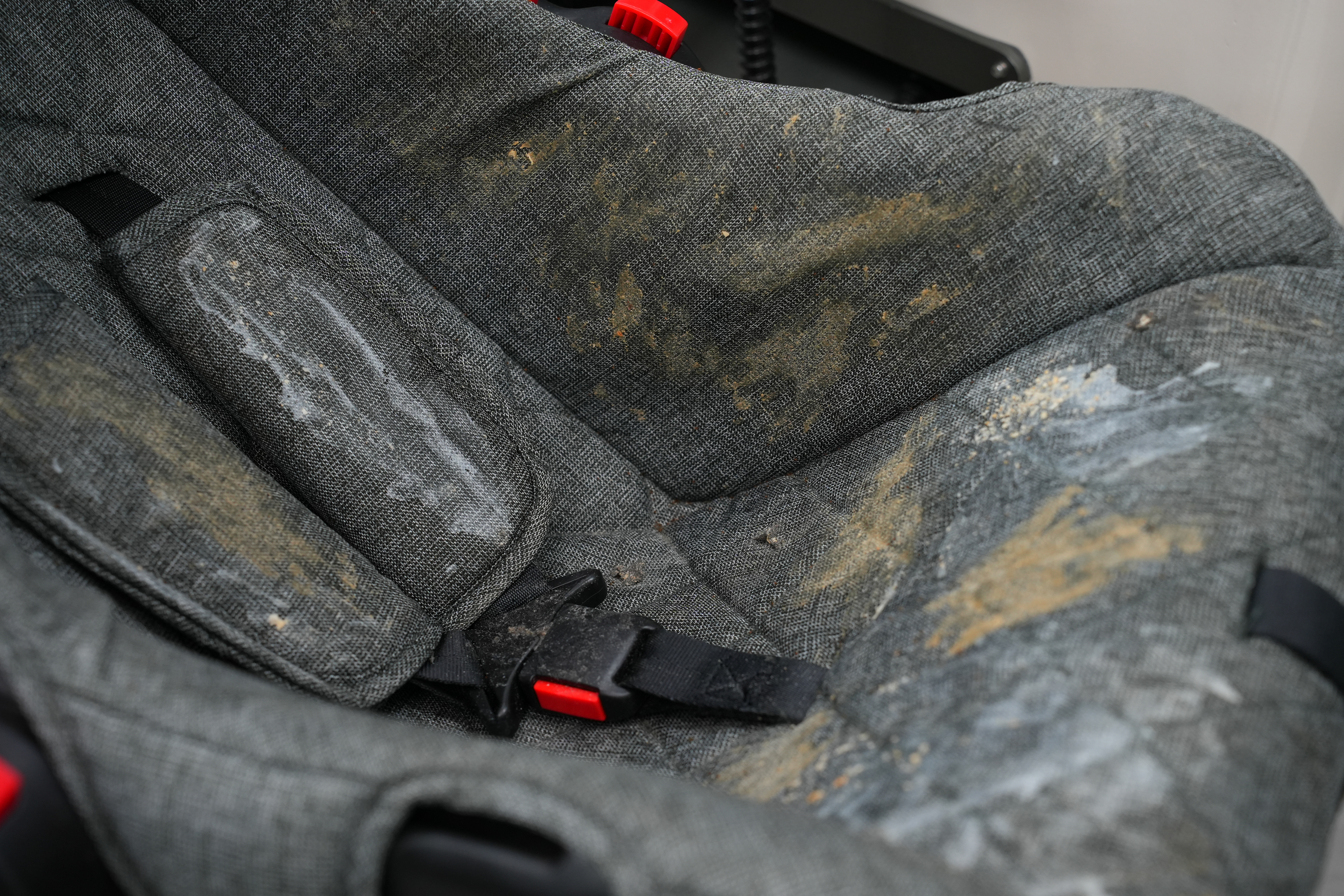
simulated dirty pram / stroller
How It Works
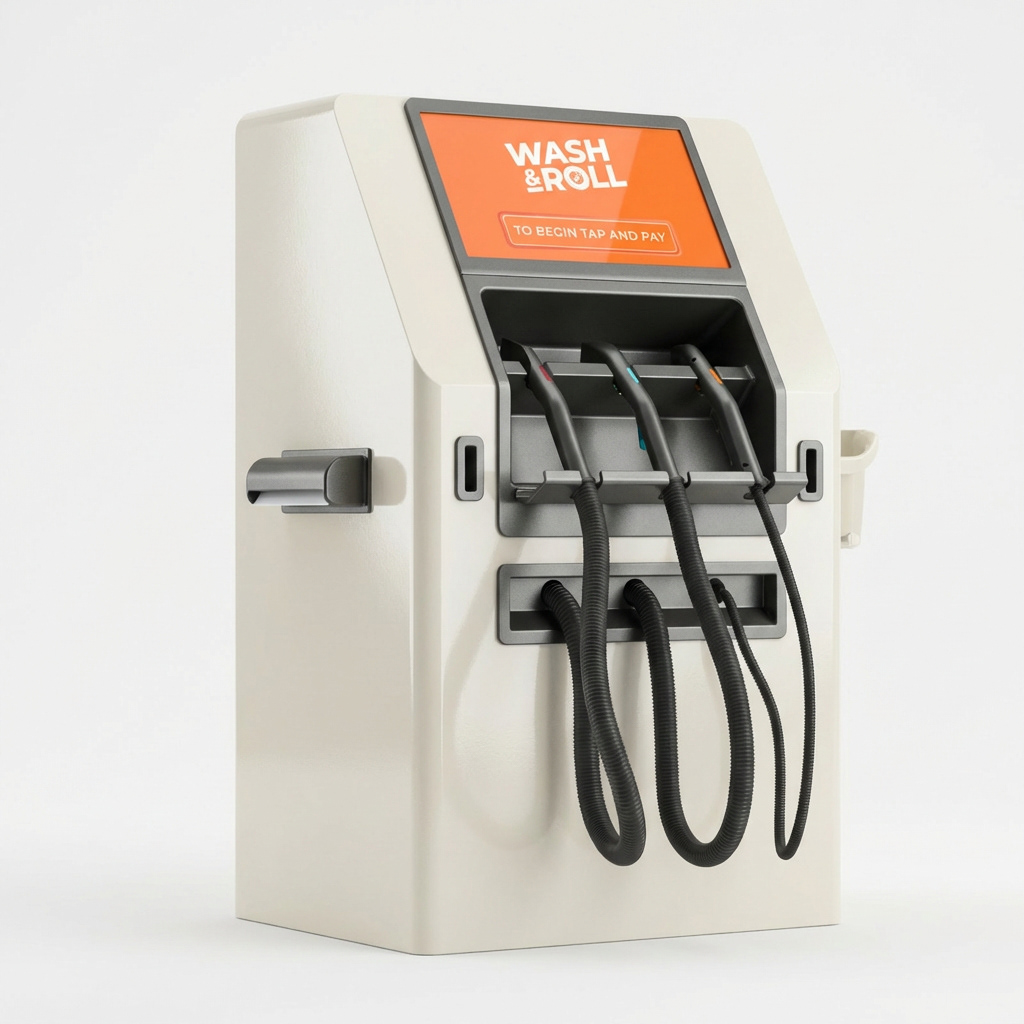
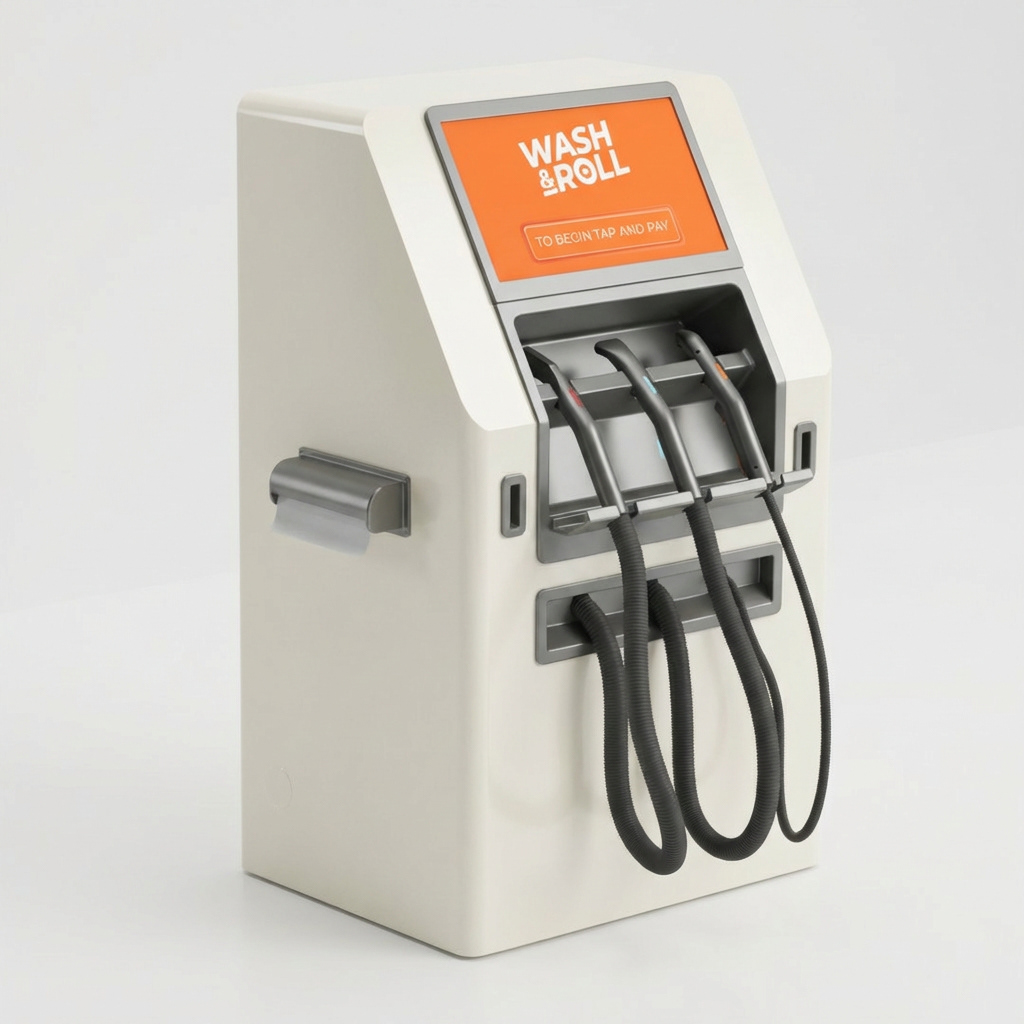
The final concept was developed around a simple and optimized cleaning sequence using three dedicated cleaning heads.
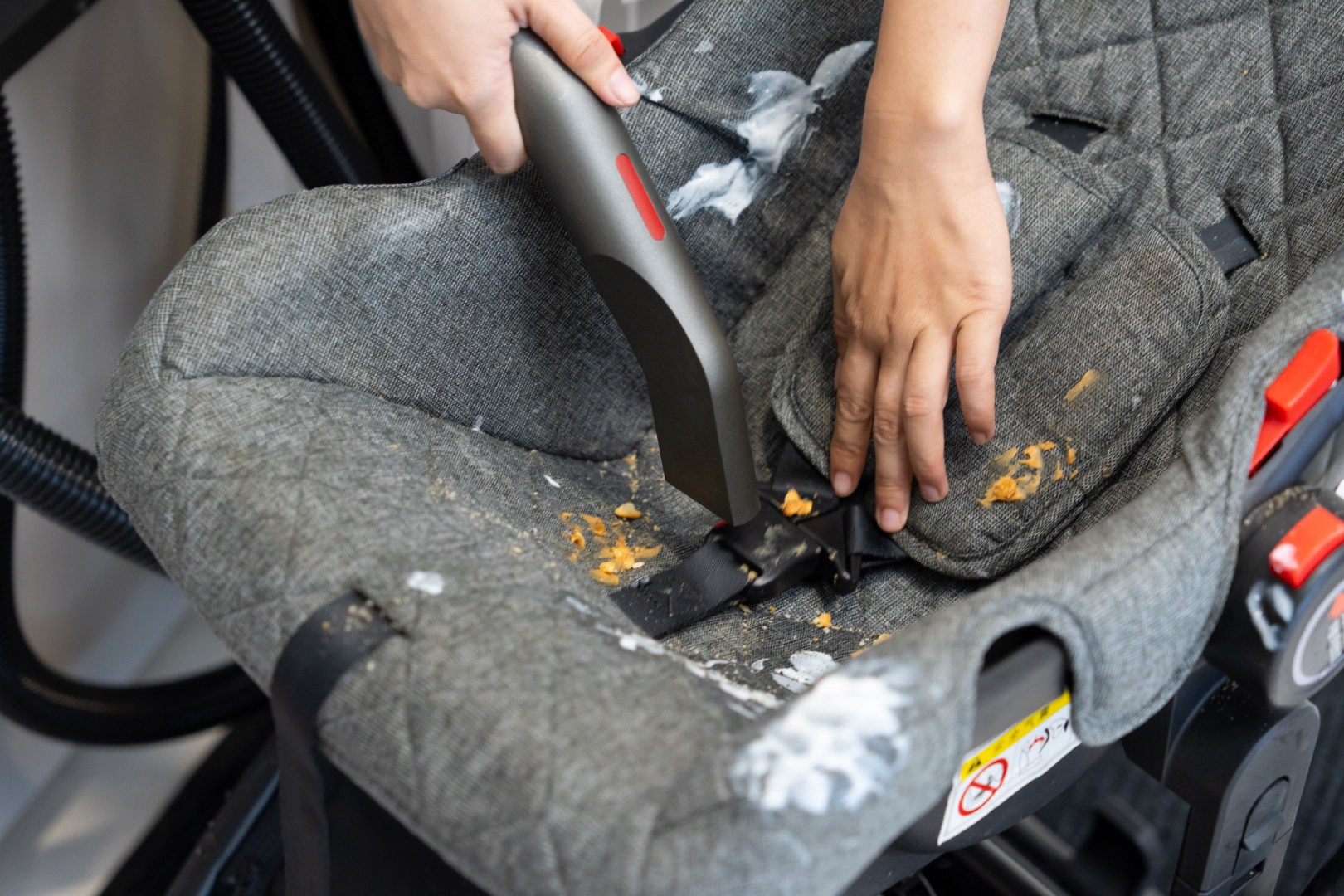
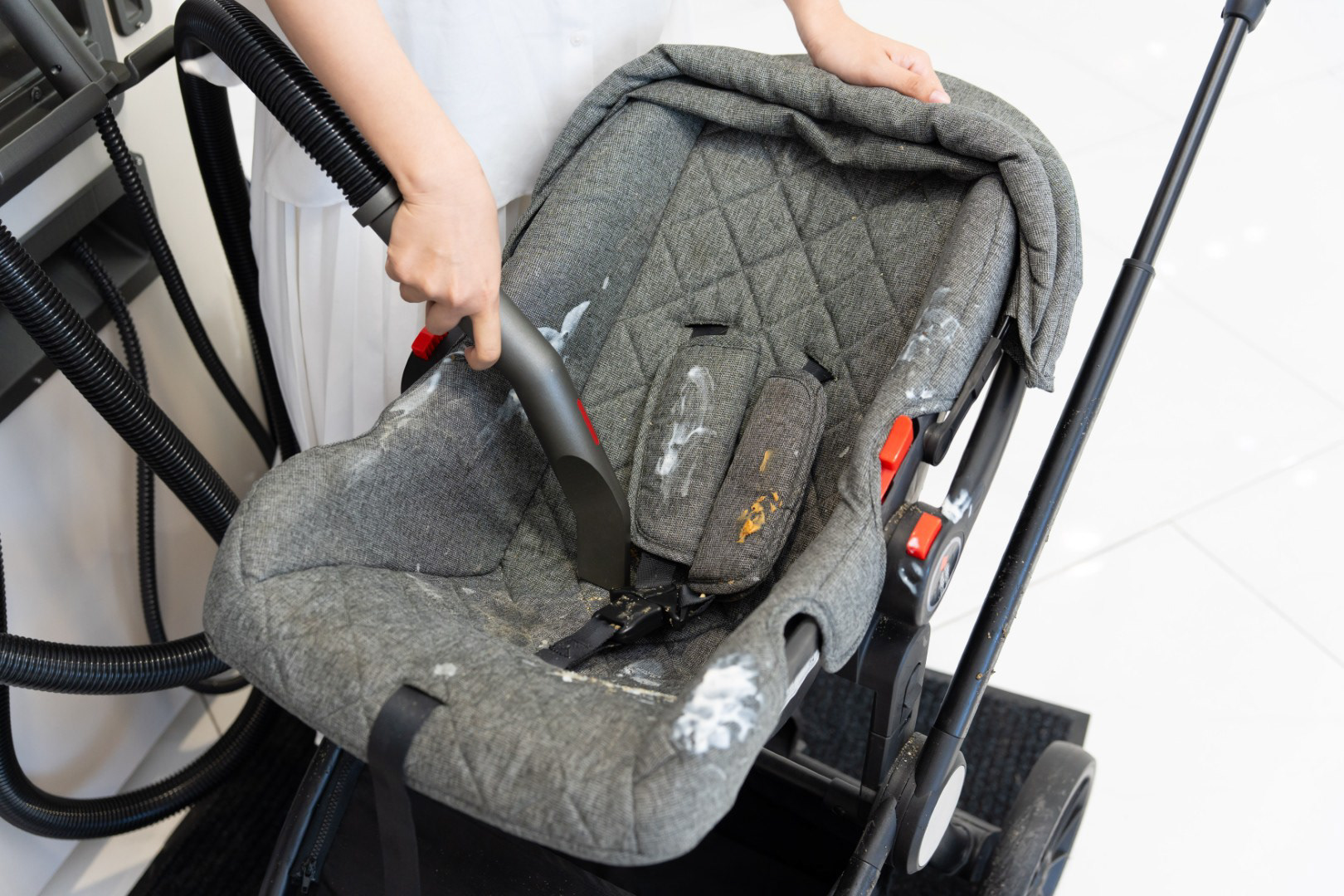
The first is a dry vacuum head, intended for removing loose dust, dry dirt, and larger particles before deeper cleaning begins. This first step is important because it clears away the rough debris that would otherwise reduce the efficiency of later stages.
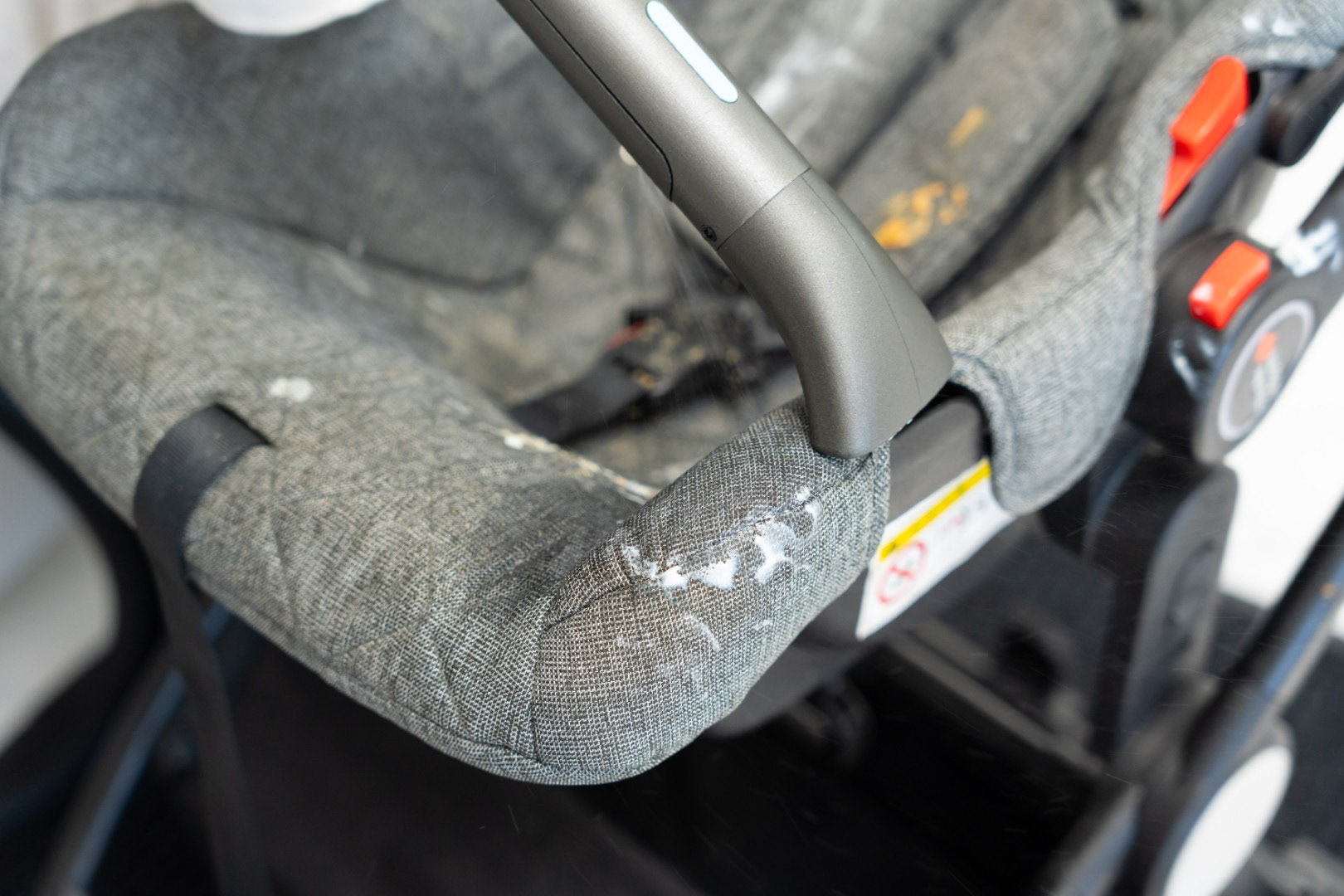
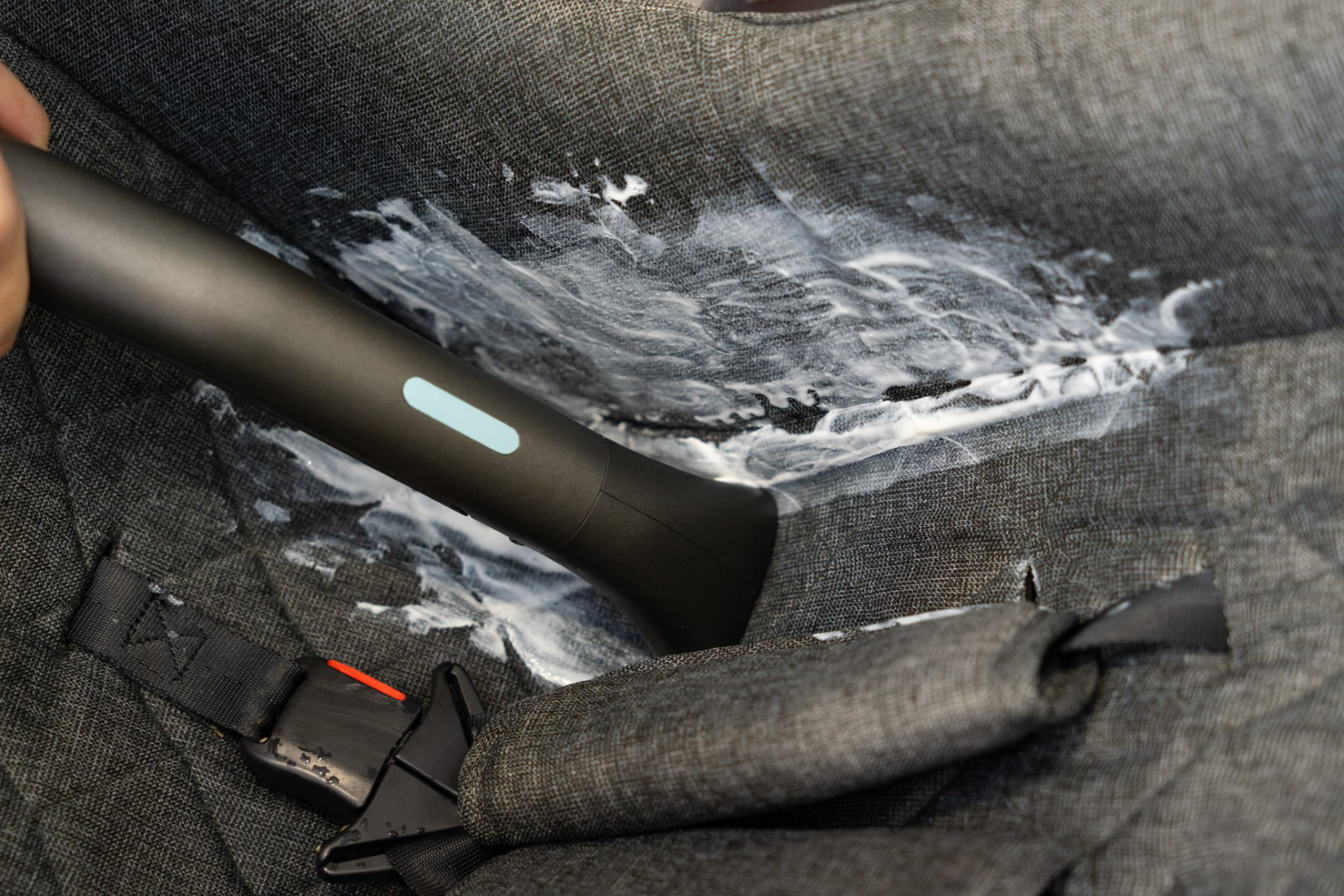
The second is a wet vacuum head, developed for more direct cleaning on textile and soft-contact surfaces. Since many stroller interiors include fabric components, cleaning cannot rely only on dry suction or steam. This head allows water-assisted cleaning while extracting the dirty moisture directly, helping treat the soft surfaces more effectively.
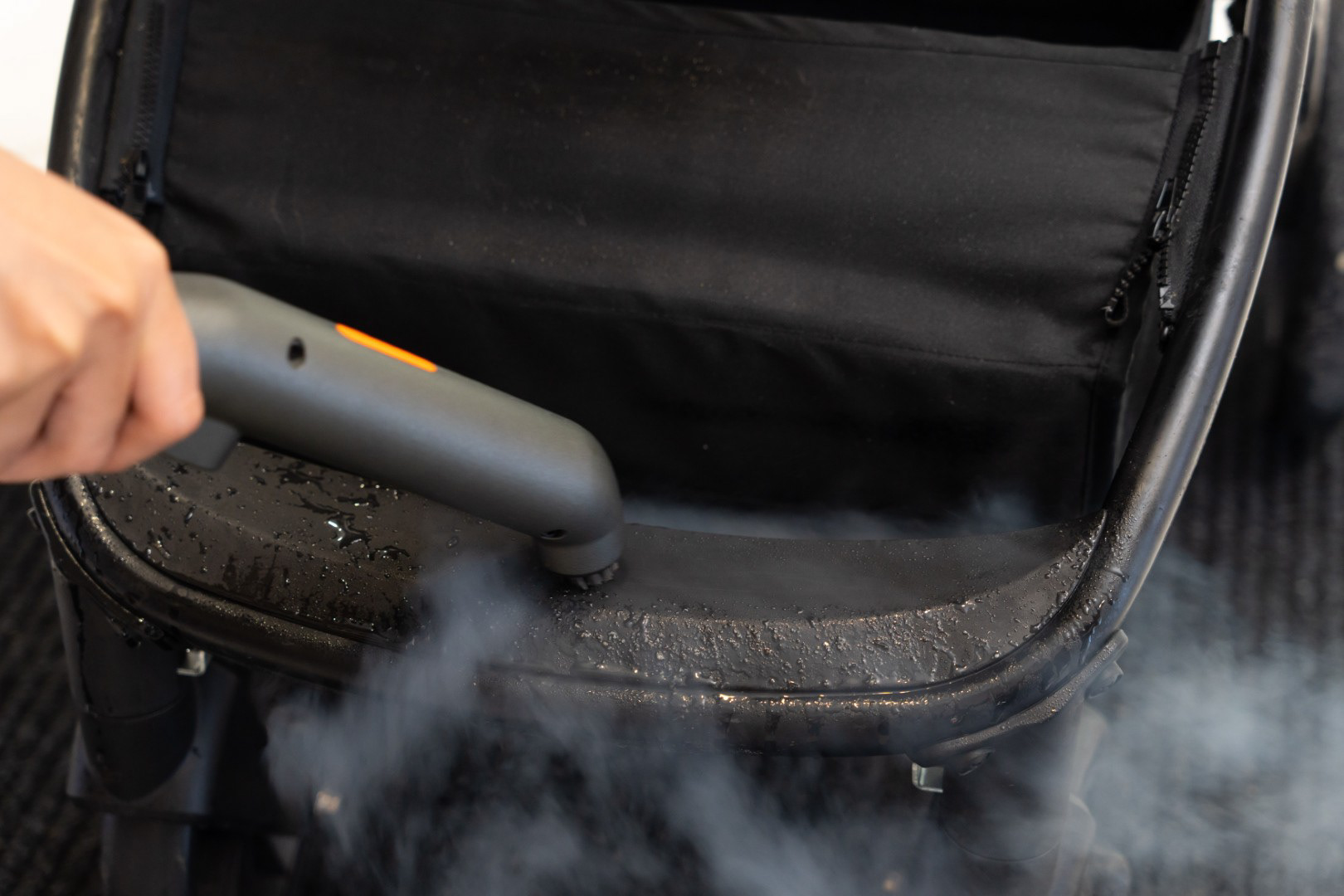
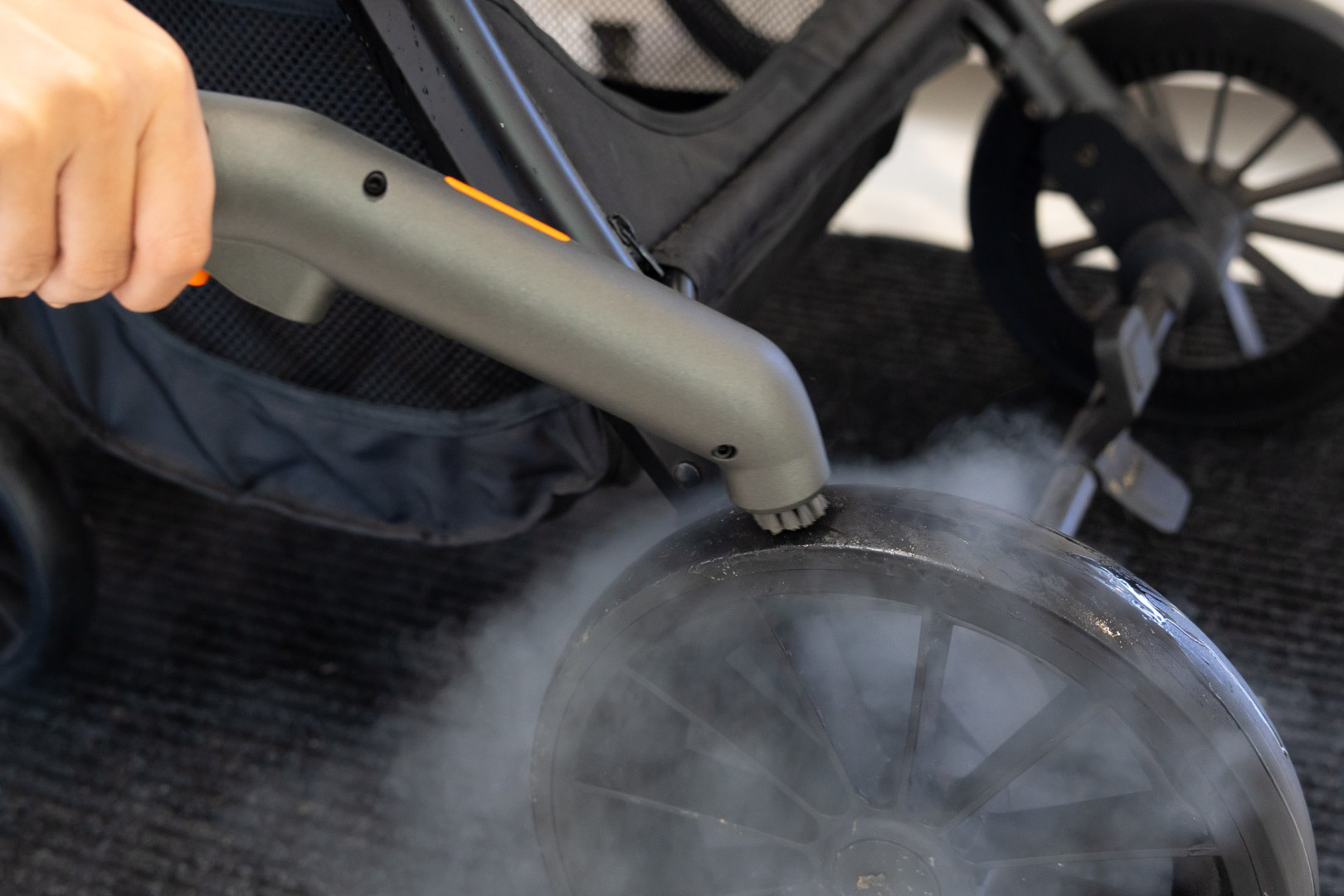
The third is a steam head, used as the final stage of the cleaning process. It provides hot steam for treating stubborn dirt and for improving hygiene in the baby-contact area. As a final step, it also helps the machine feel more complete as a care-oriented service, not only a dust-removal device.
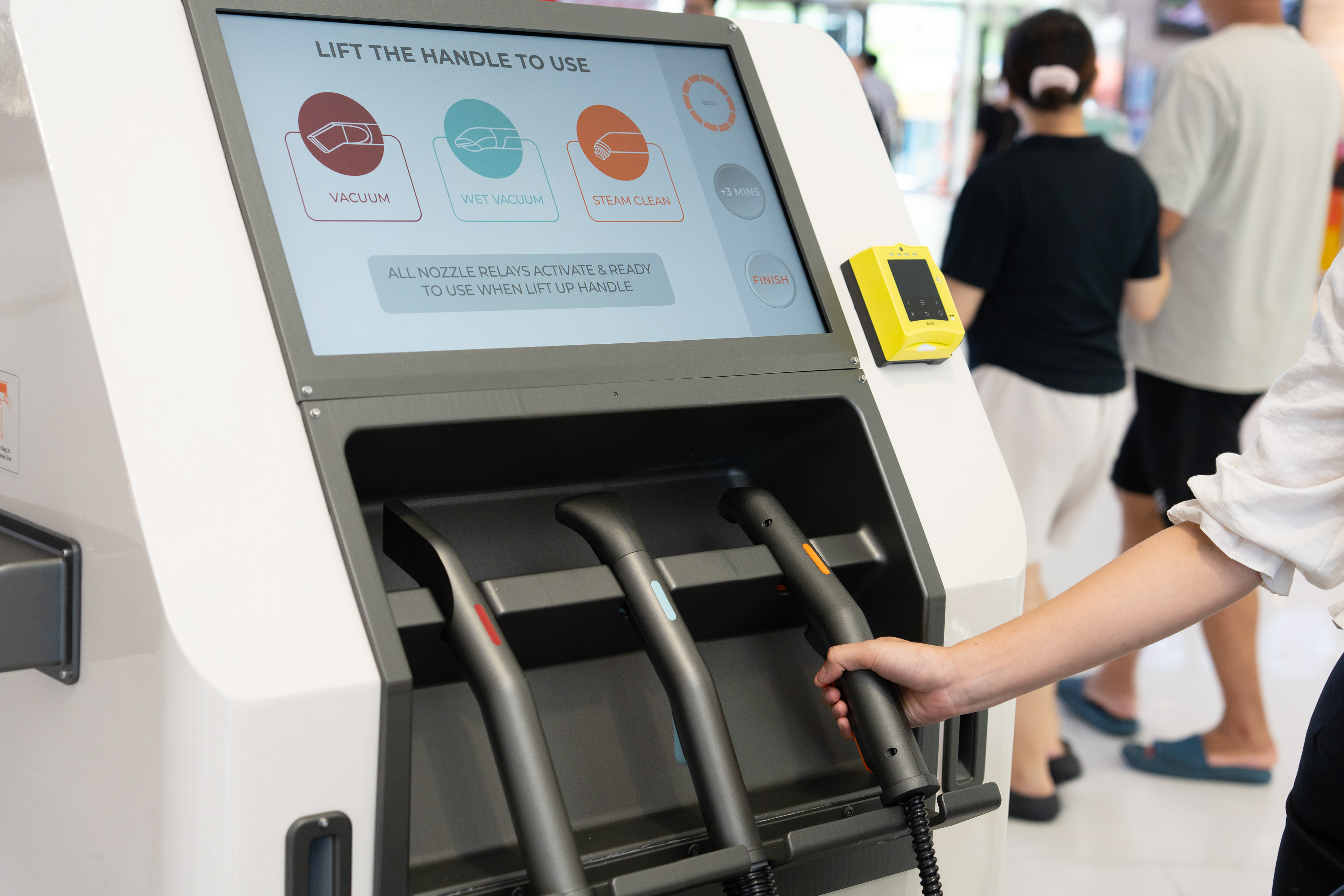
The full sequence follows a clear order: dry vacuum, wet vacuum, then steam. This order was important because the machine needed to guide users through a process that feels natural and efficient, without making them think too much.
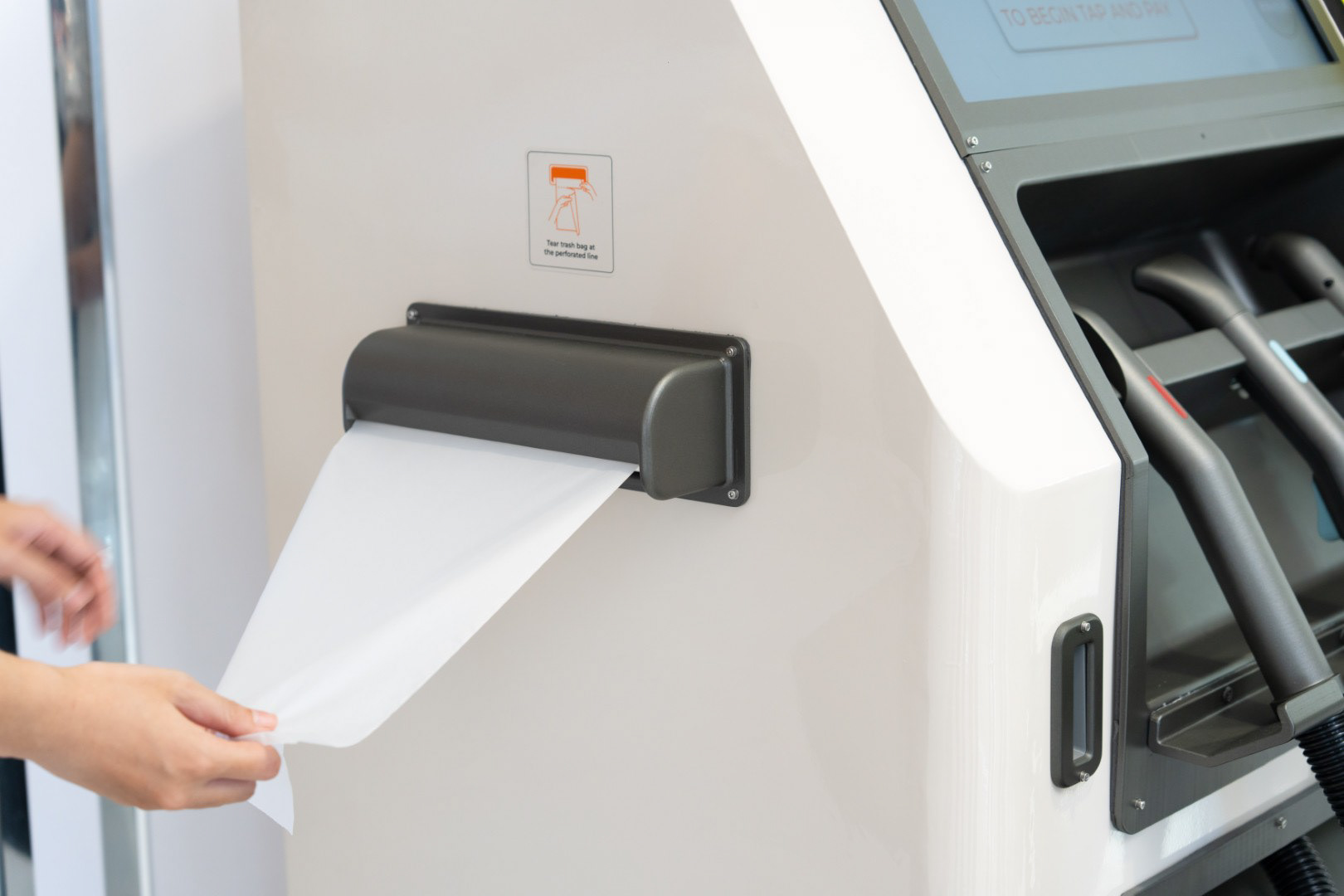
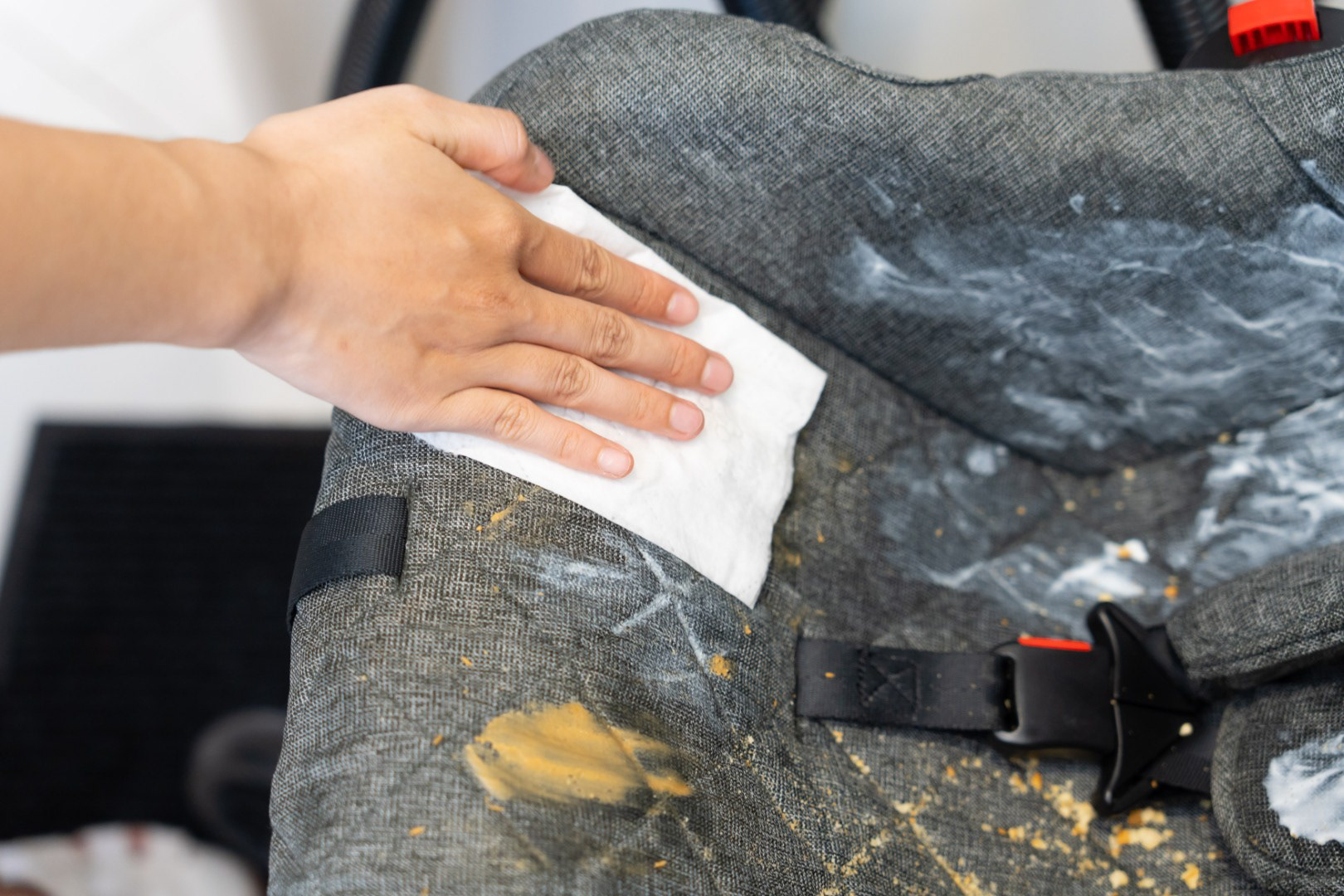
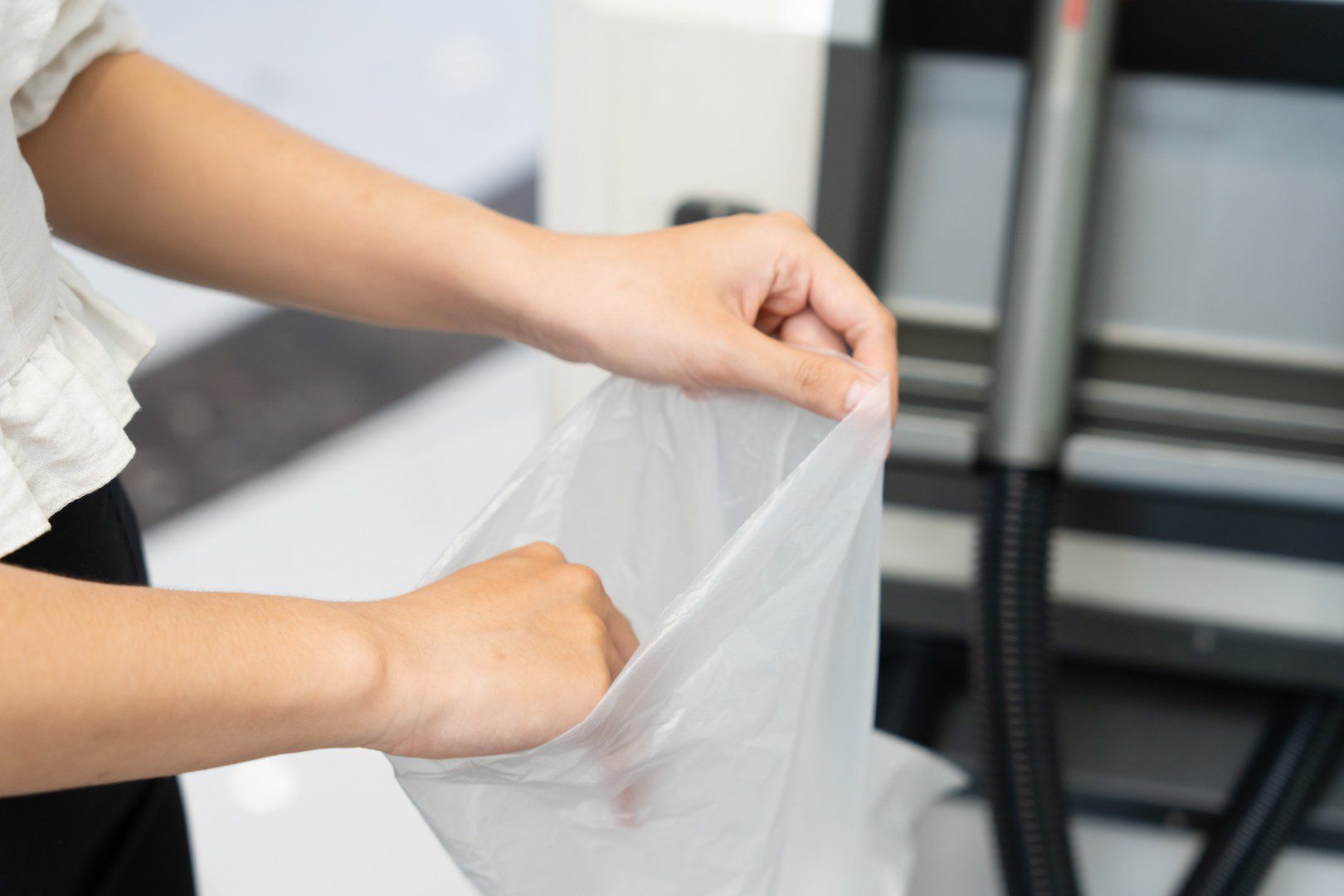
On the left side of the machine, a trash bag dispenser was added so users can easily dispose of tissues, wet wipes, and small pieces of waste collected during cleaning. This detail may seem small, but it helps complete the overall experience by keeping the cleaning process more organized and self-contained.
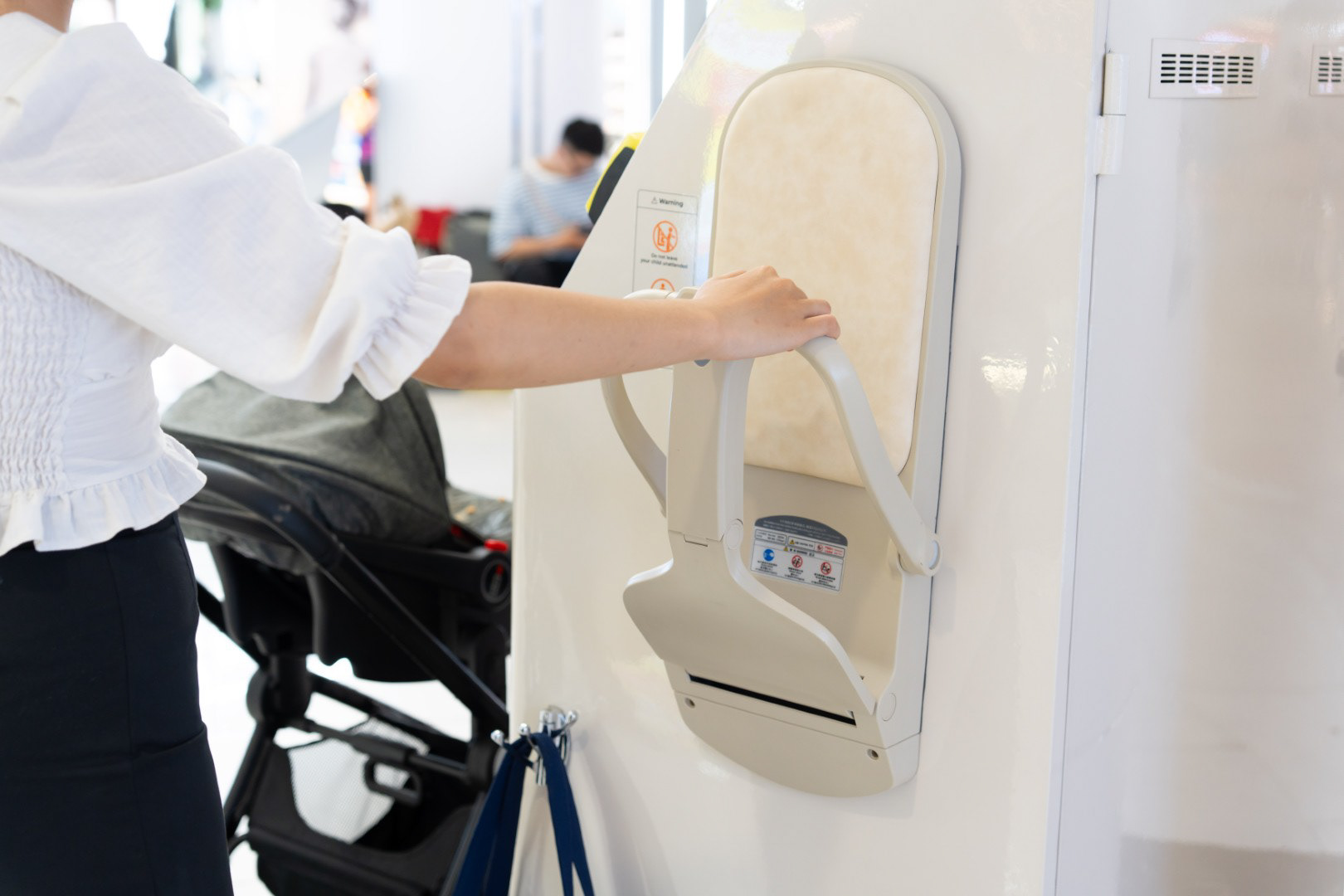
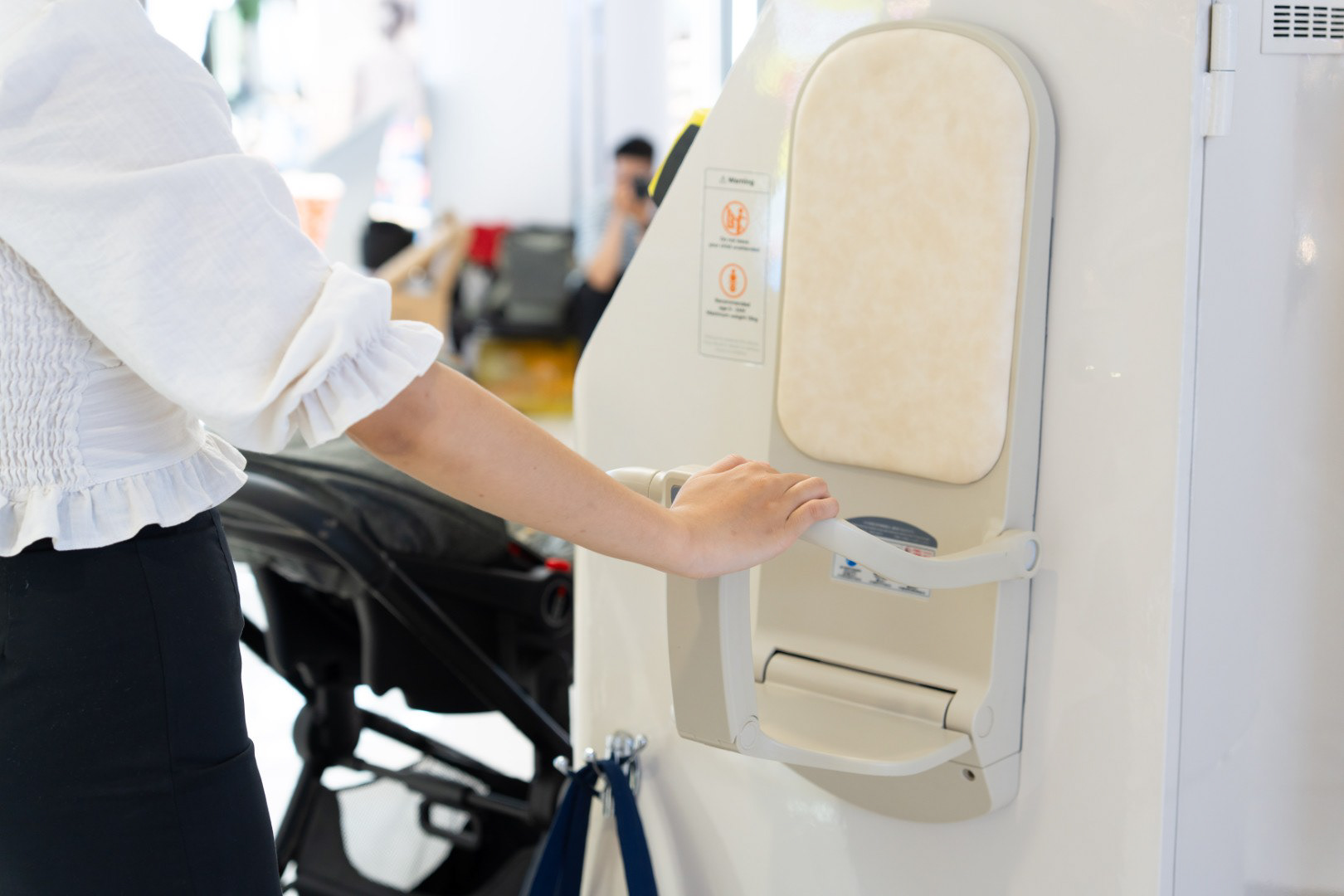
A side baby seat was also integrated into the machine. This responds to a very practical situation: sometimes the stroller is empty, but sometimes the caregiver may still be holding the child while trying to clean it. The side seat creates a temporary place for the child to sit safely beside the unit, allowing the stroller itself to be cleaned more freely.
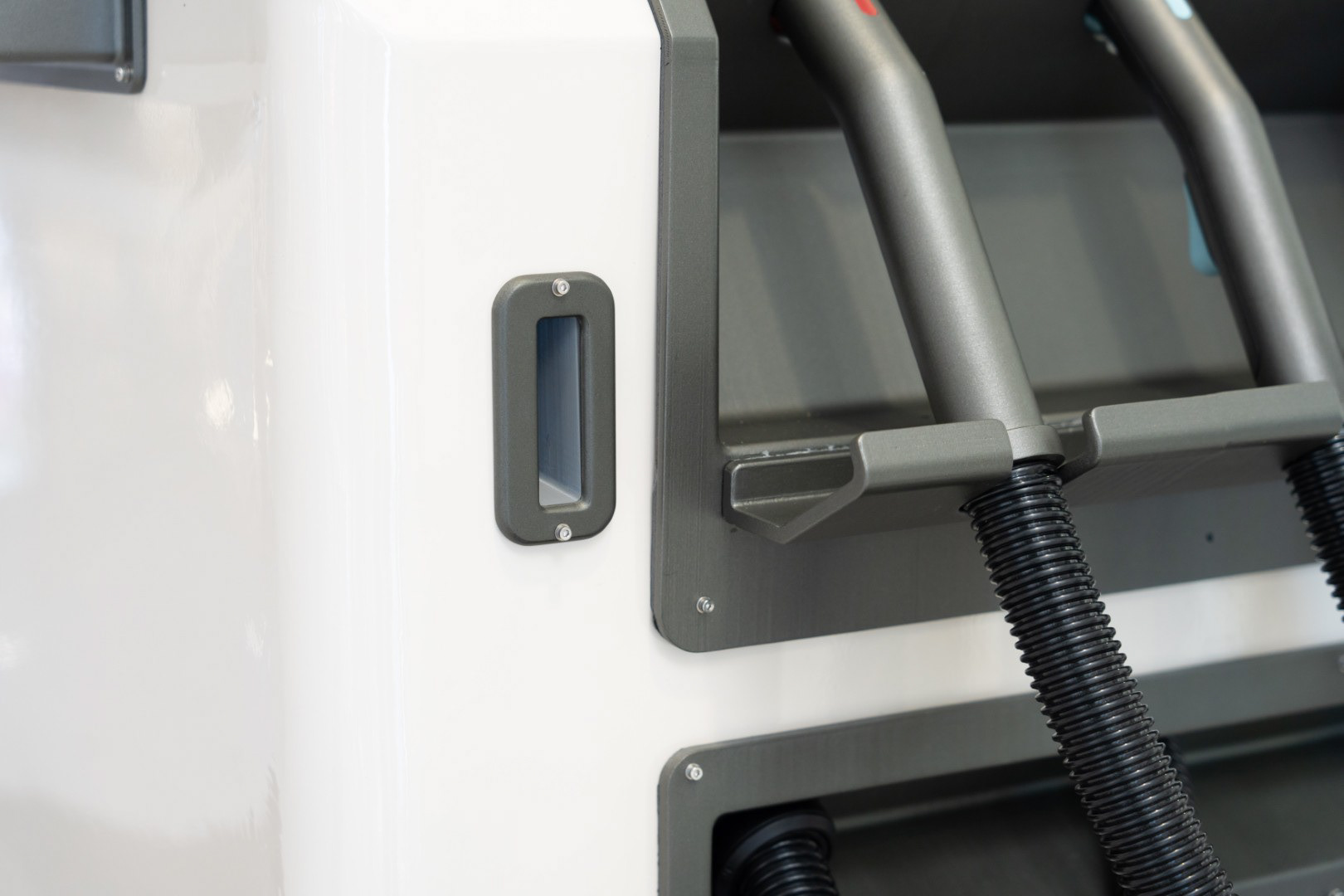
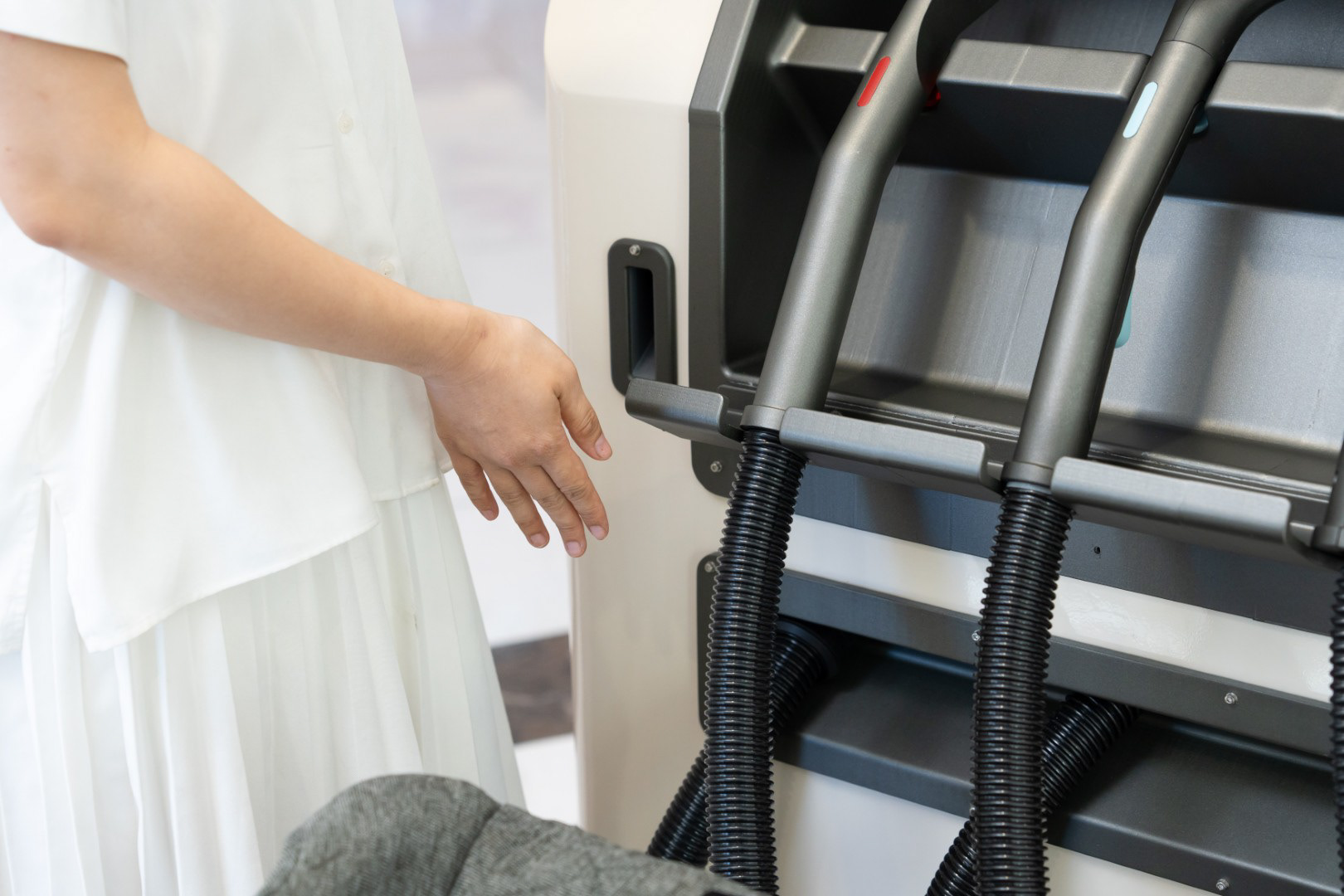
Because stroller fabric can remain damp after cleaning, the machine also includes air-drying slots to help improve airflow and support faster drying after use.
Ergonomics and User Experience
A major objective of the project was to make the machine as easy and comfortable to use as possible.
The machine was also developed with strong attention to noise reduction and vibration control. Since this is a public-use cleaning station and may be used near babies or children, the experience needed to feel much softer than typical cleaning equipment. The system was therefore planned with internal acoustic insulation and vibration reduction in mind, targeting a very quiet operating level of around 30-50 dB.
This low-noise approach also helped justify the presence of the side baby seat, allowing the product to feel calmer, safer, and more suitable for family-oriented environments.
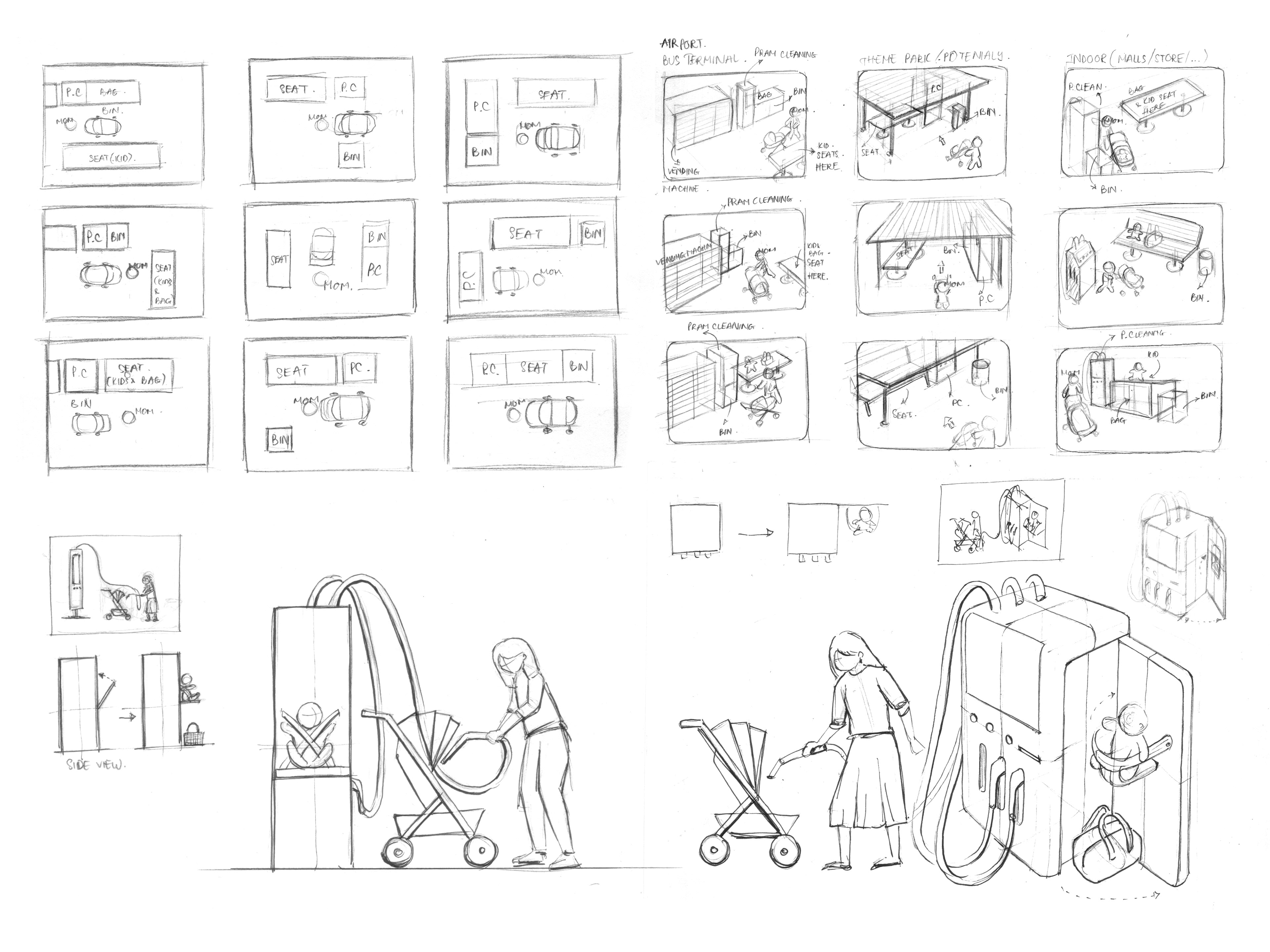
note sketches during the environmental observation and research
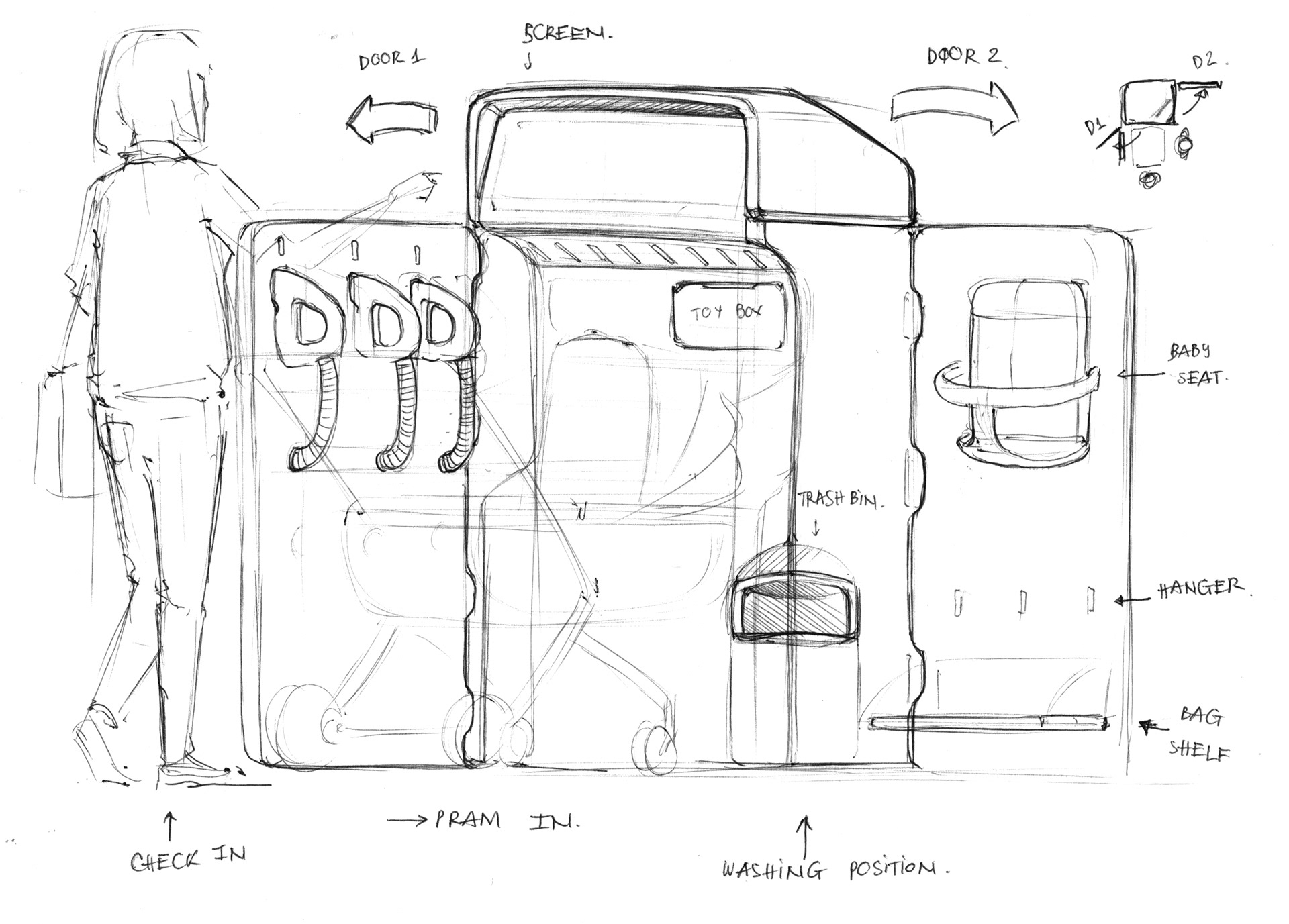
ideation design sketches
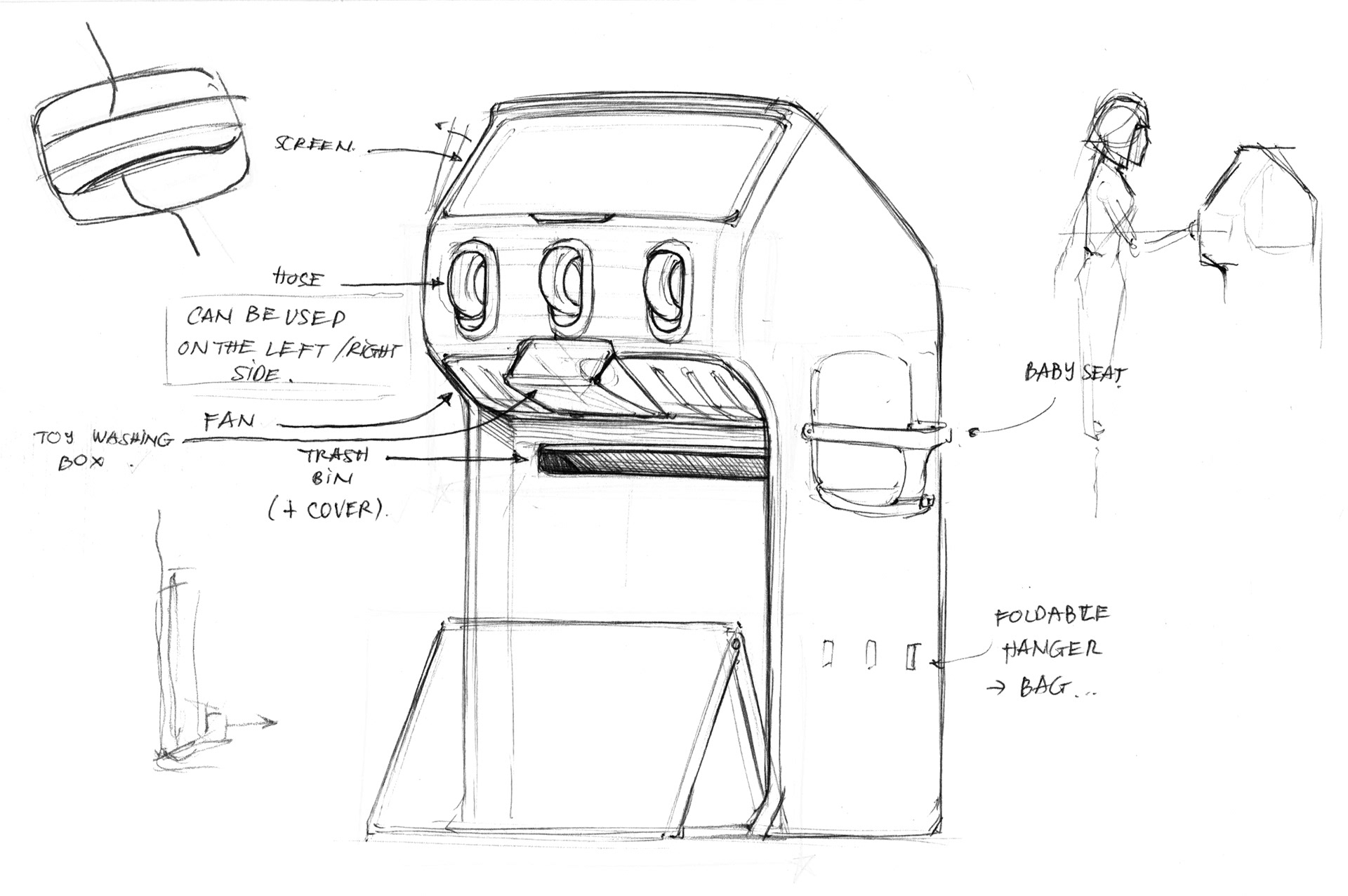
ideation design sketches
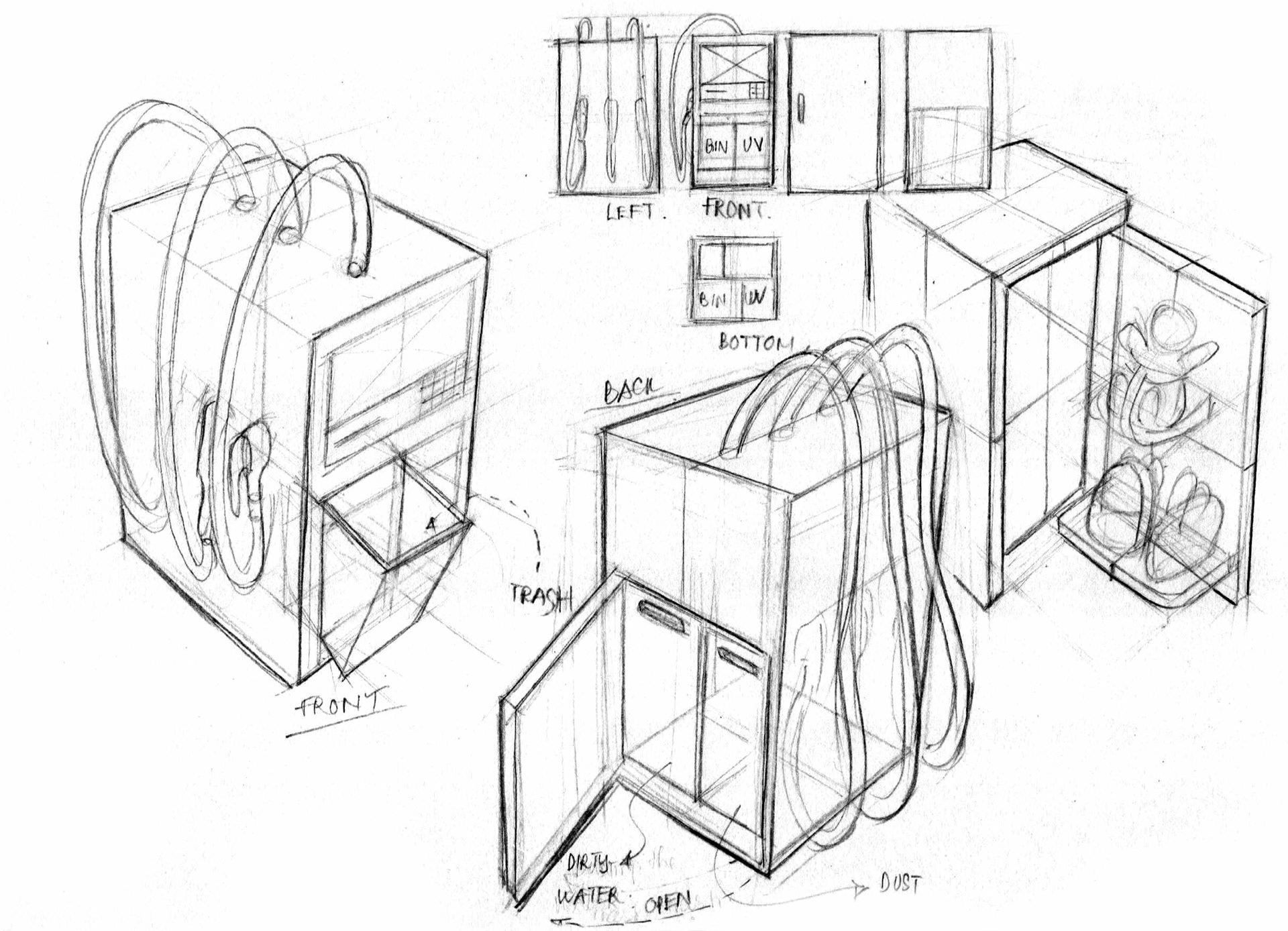
ideation design sketches
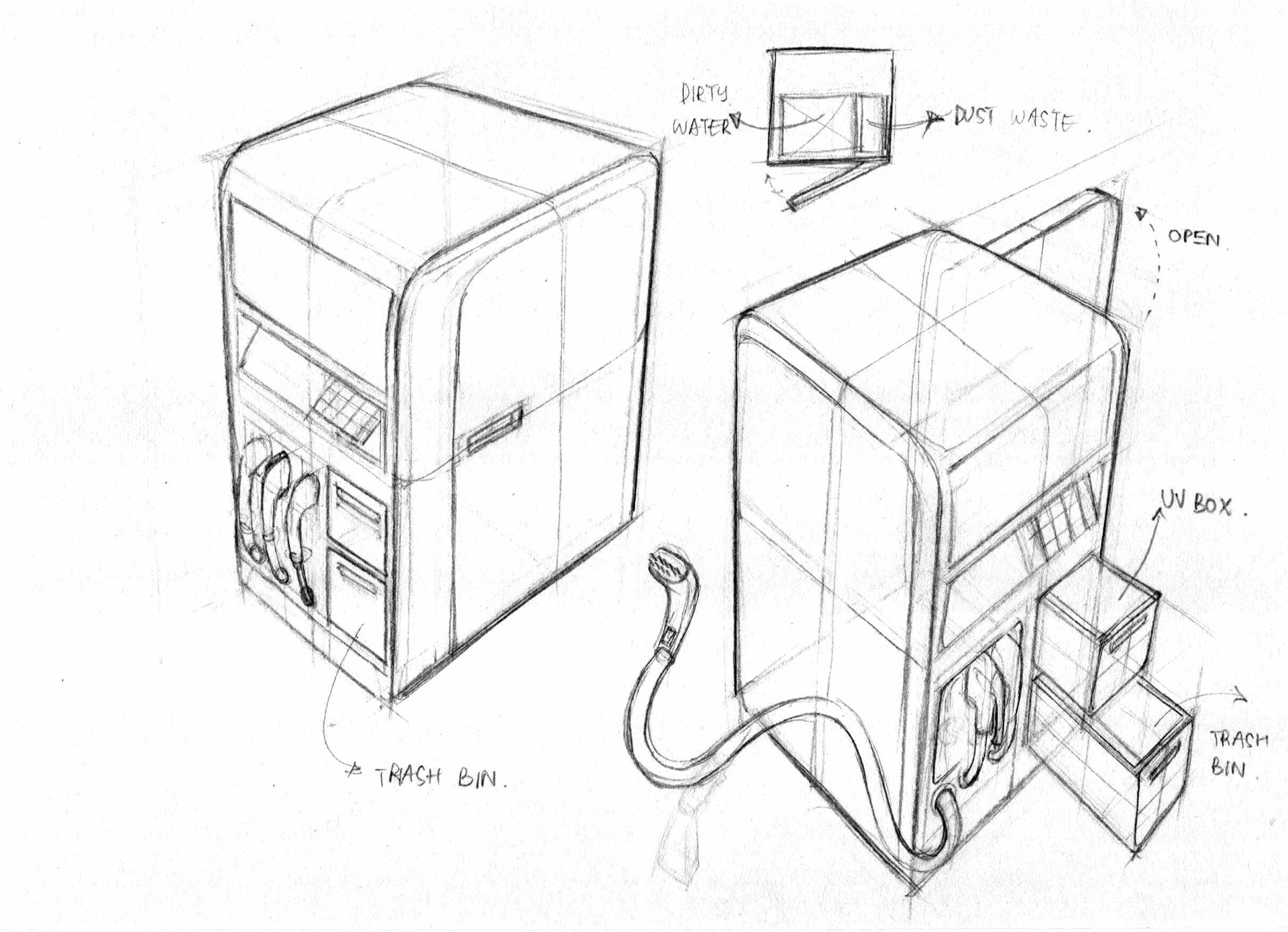
ideation design sketches
Component placement was defined through contextual research and observation of the surrounding environment, then exploring over sketches and brainstorming. The final layout responds to user reach, visibility, and workflow, creating a more intuitive, efficient, and comfortable interaction experience.
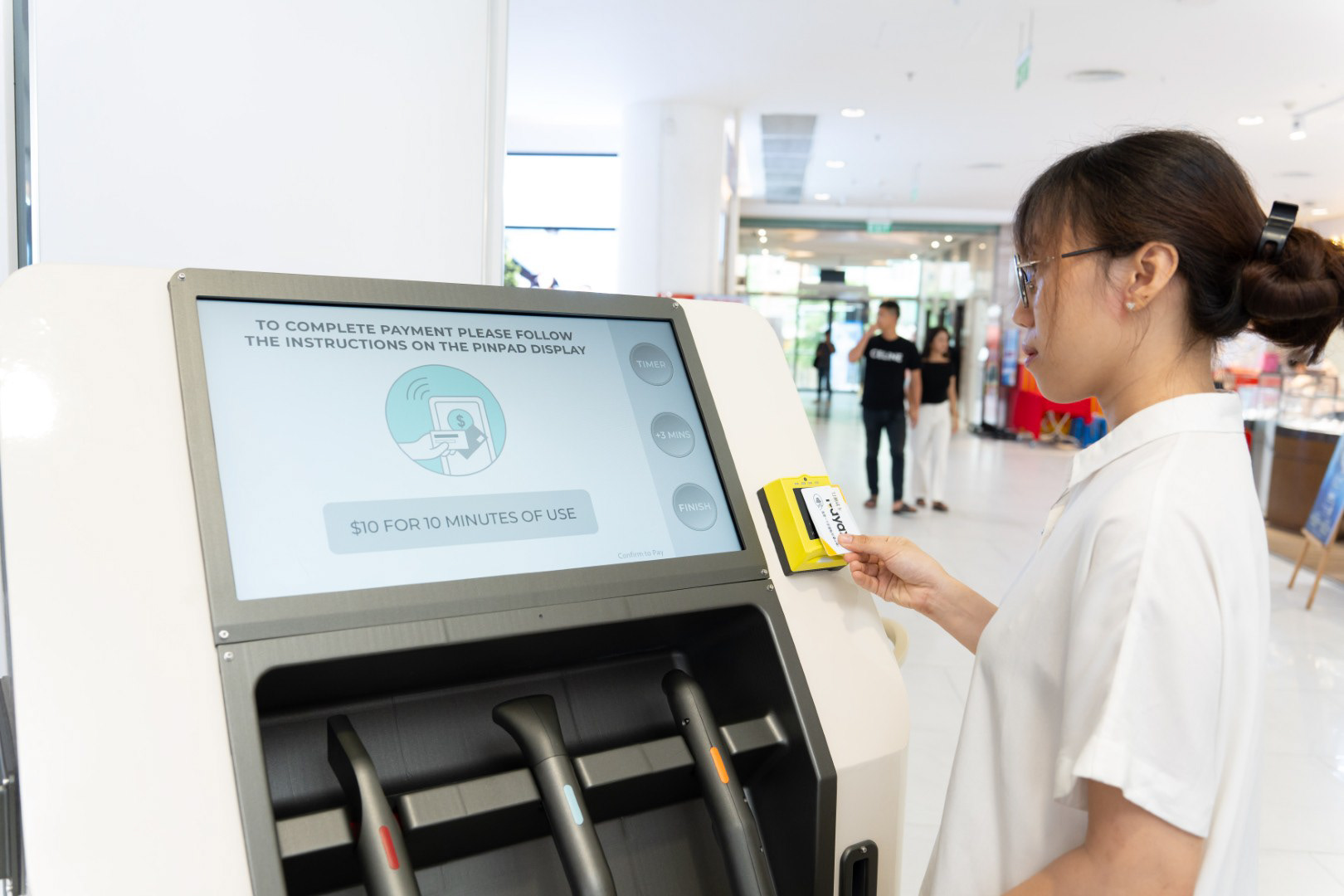
The screen was angled upward to align with the standing user’s field of view. This improves readability, reduces unnecessary head movement, and creates a more intuitive visual interaction with the machine.
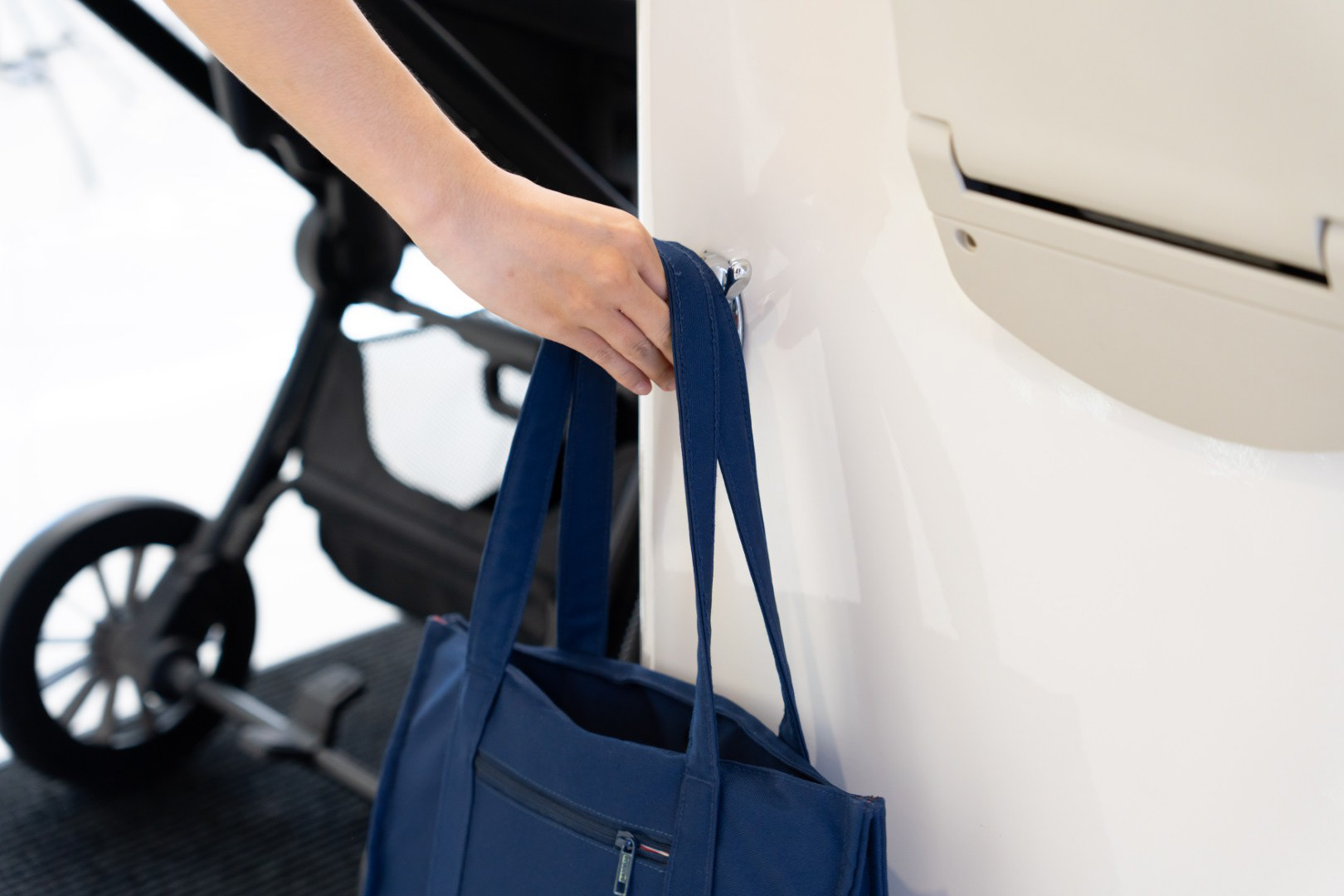
A hanging hook was integrated from the beginning of the design process based on research insights. It was added to support parents who often carry diaper bags, children’s belongings, or personal handbags while using the machine.
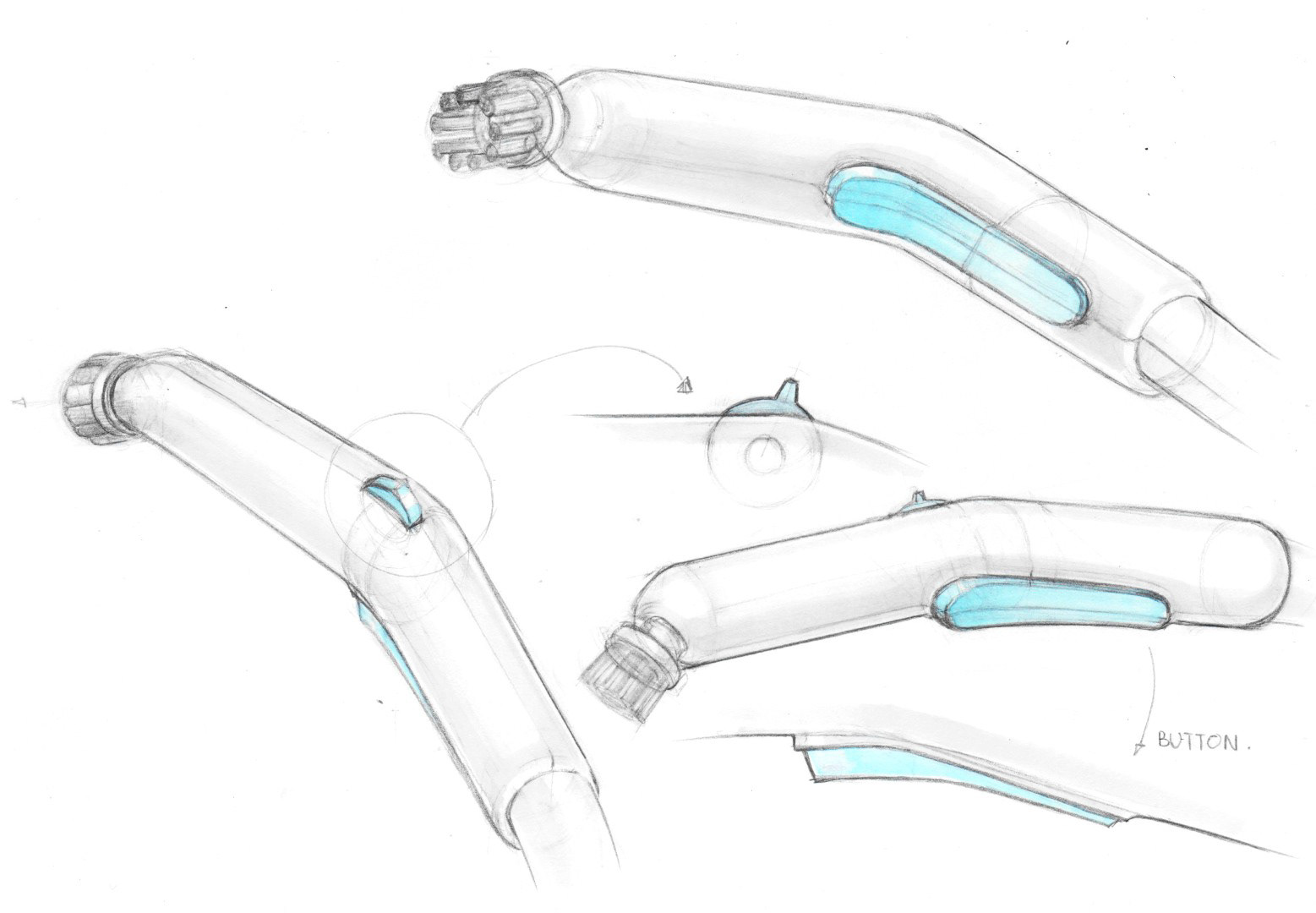
nozzle head design sketches
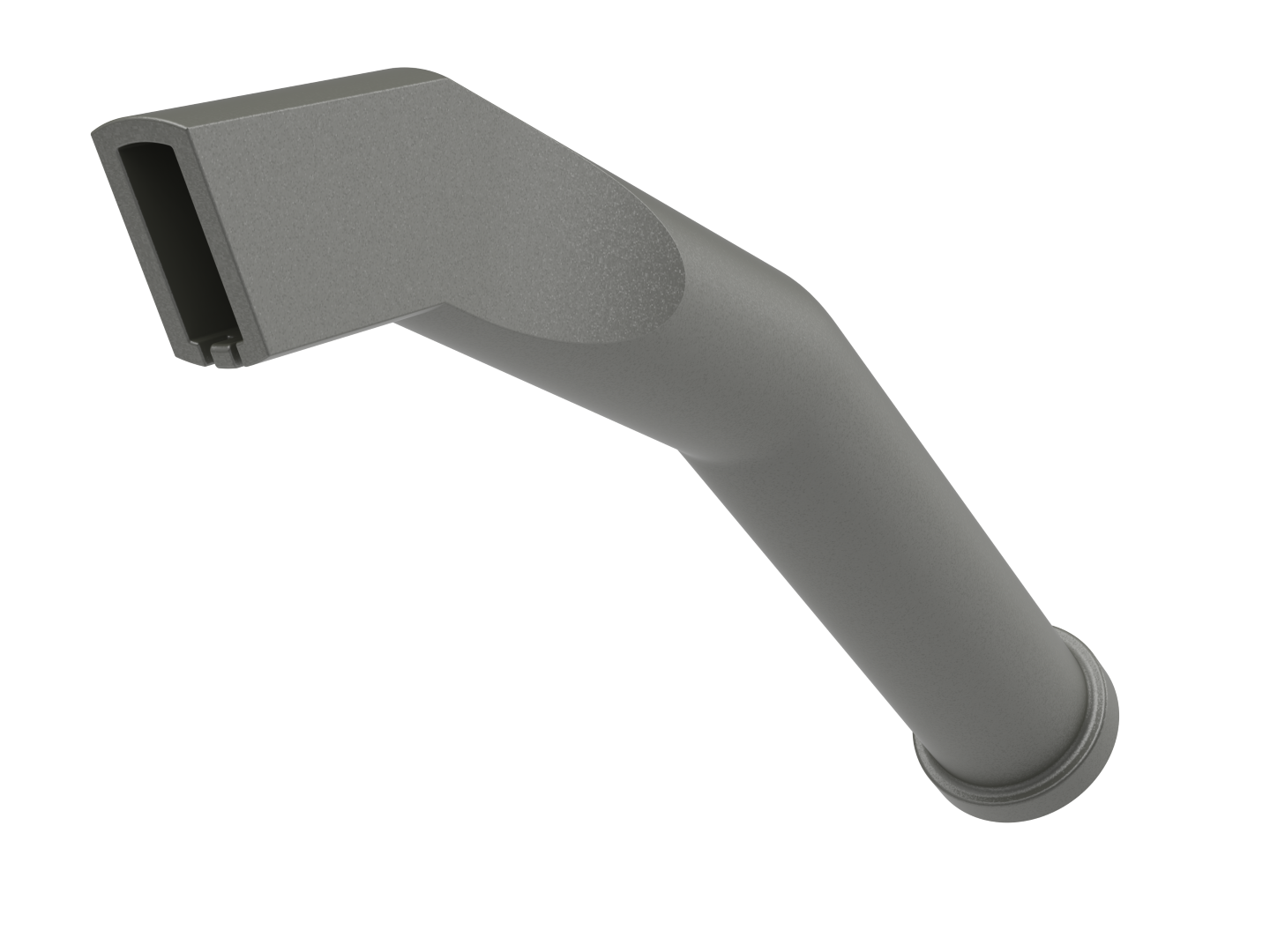
dry vacuum head
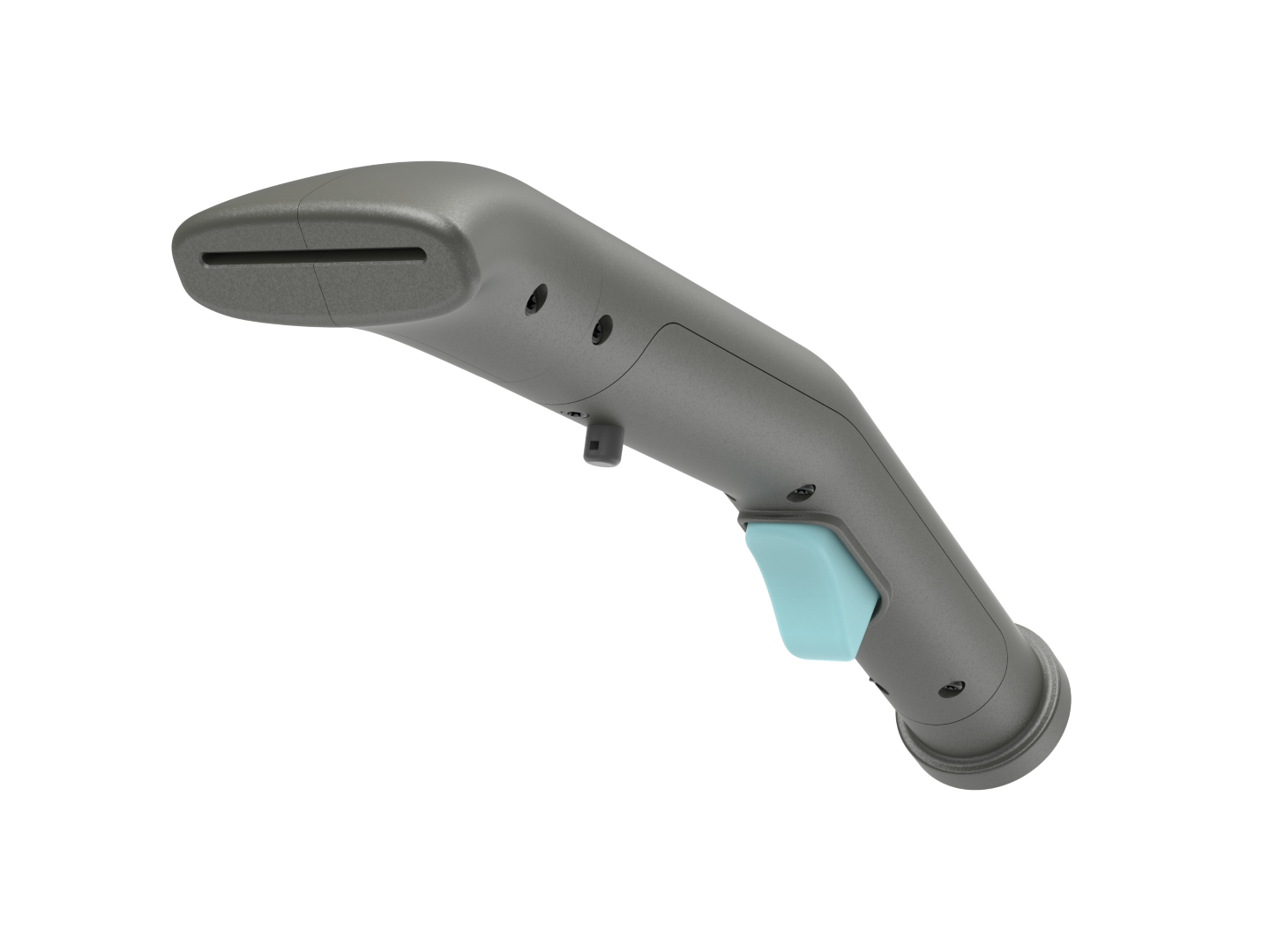
wet vacuum head
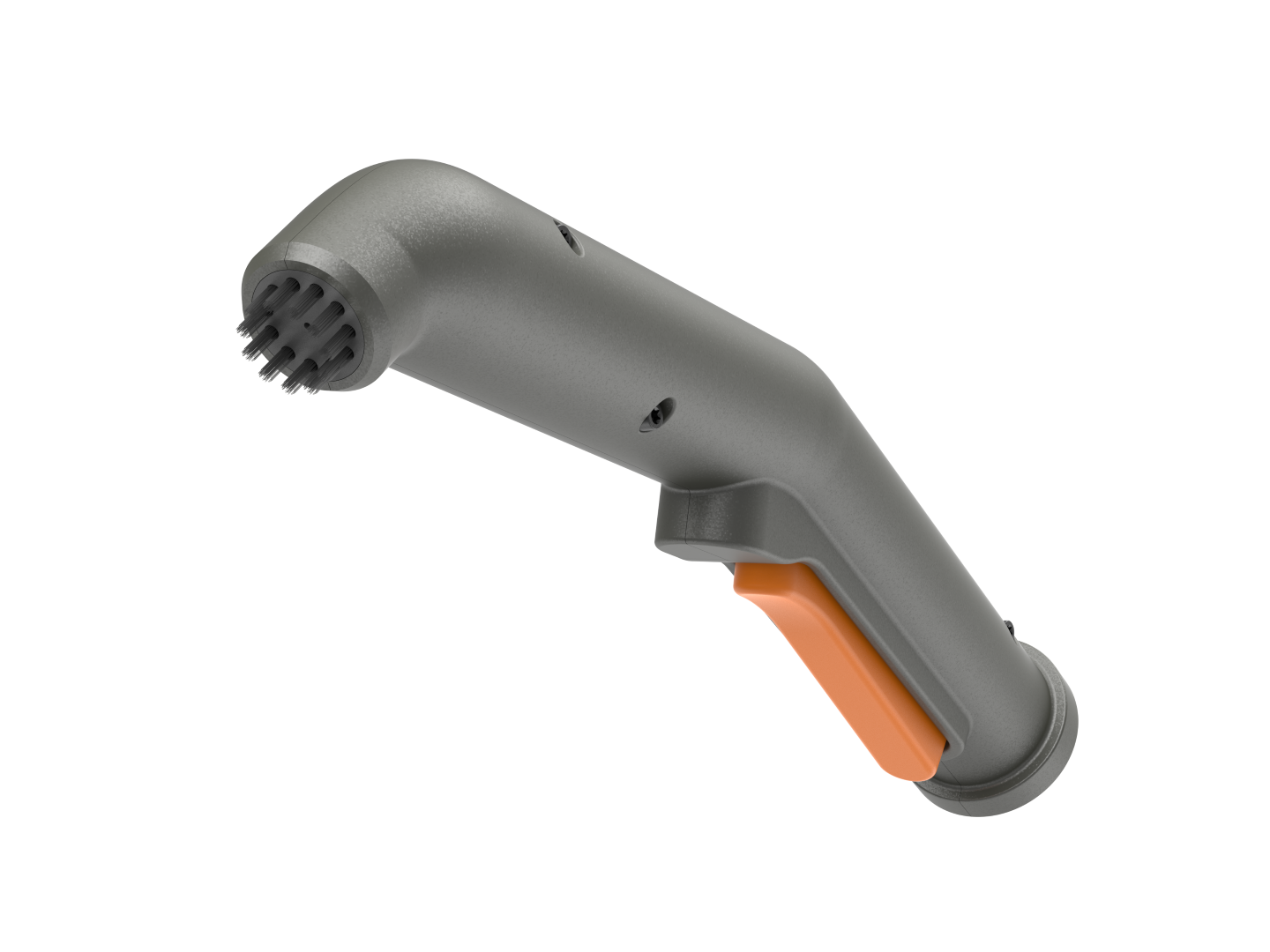
steam head
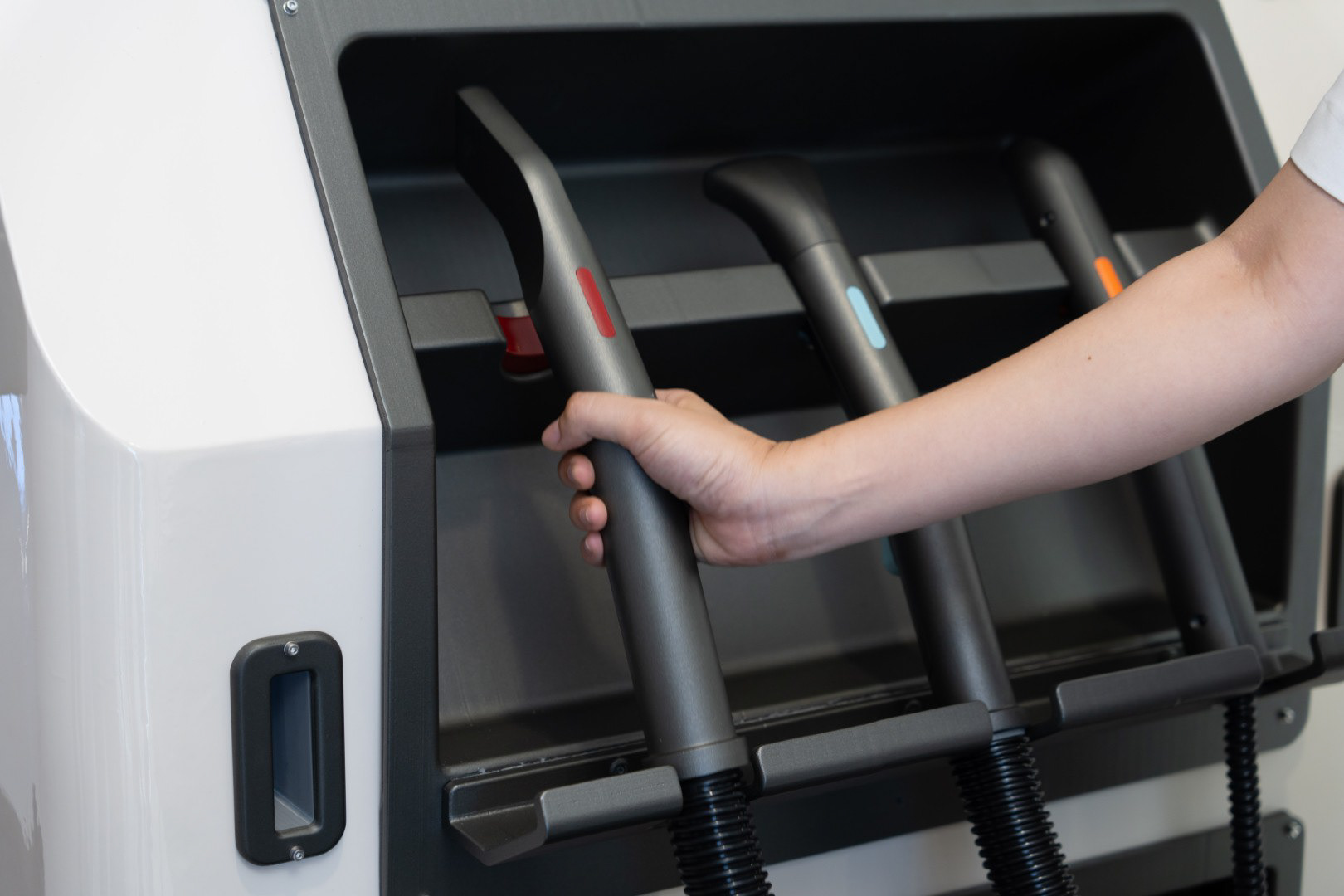
nozzle heads holder / base
The handle design and the holder were designed to support a natural wrist position during standing use, which provides an ergonomic grip angle, better control, and greater comfort through repeated interaction.
Development Process
One of the most important aspects of Wash & Roll is that it was not developed only through styling or visual concept work. The project involved a long and layered development process, combining product thinking, physical experimentation, industrial design, and engineering integration.
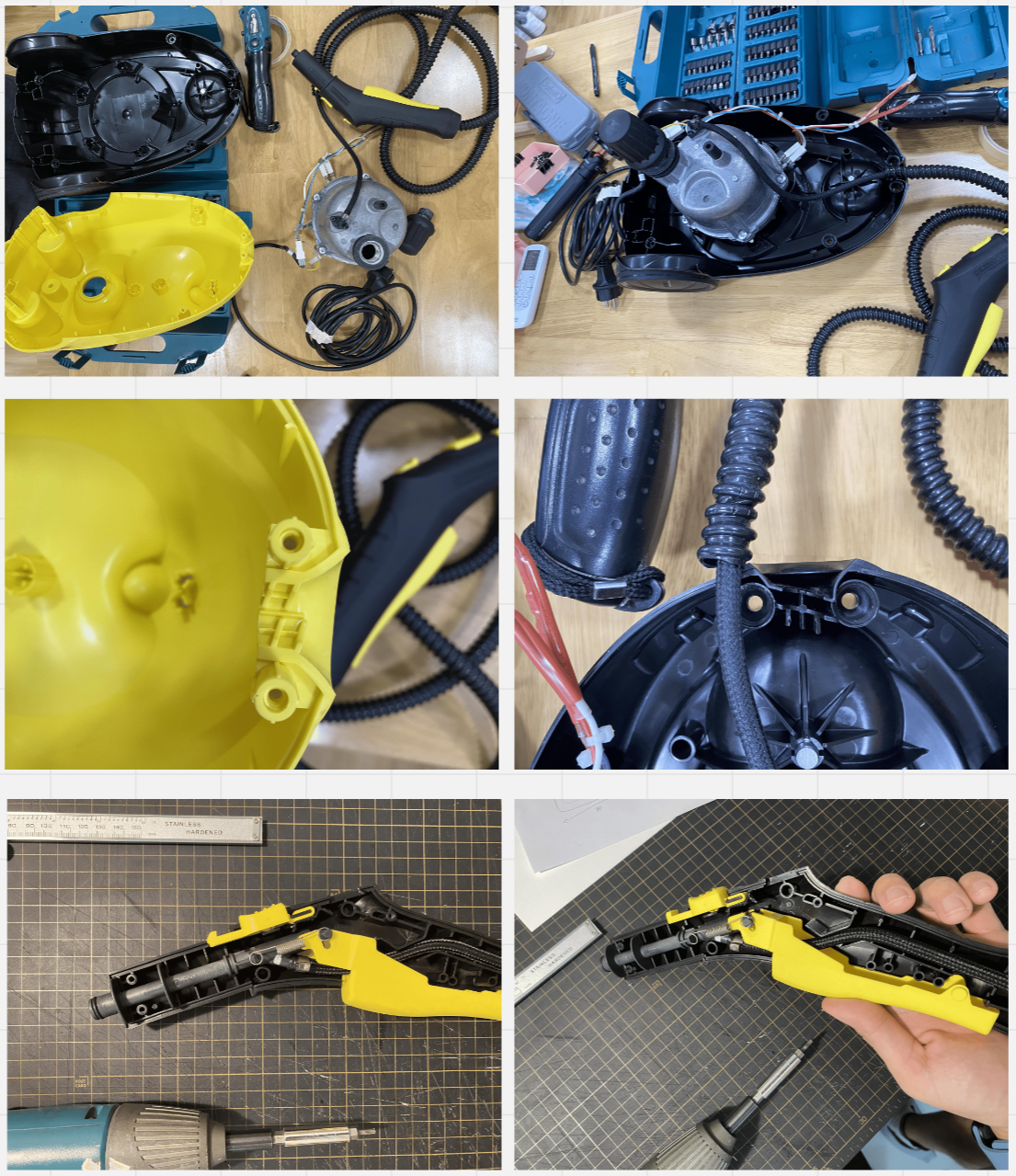
From the early stage, once the client’s initial idea was established, the development moved into hands-on testing with real devices and real stroller-cleaning scenarios. Existing vacuum cleaners, wet-cleaning devices, and steam machines were purchased to process Product Autopsy - disassembled, tested, studied, to understand better their internal structures, their performance characteristics, and their potential for integration into a larger unified machine.
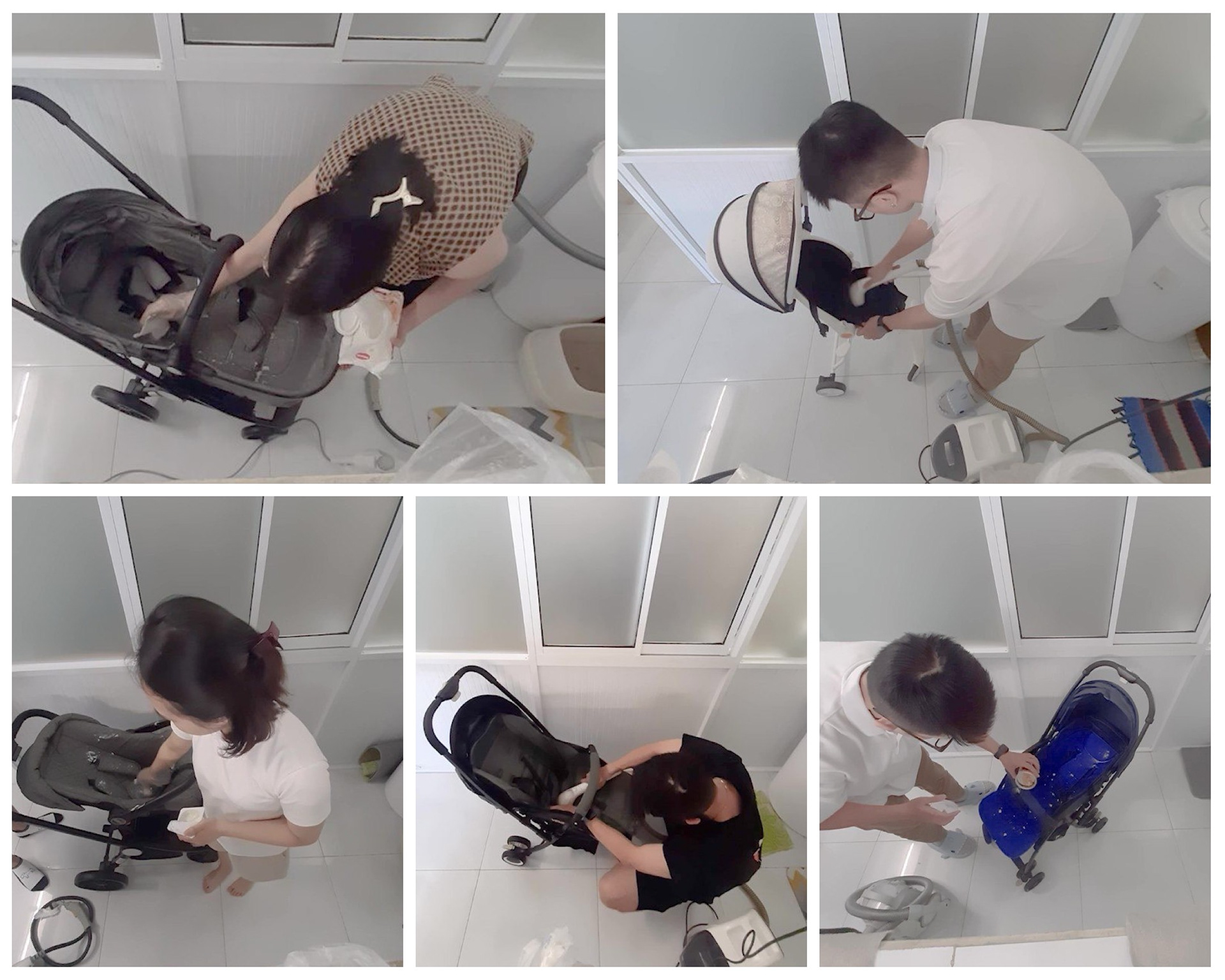
data collection through simulated testing scenarios
At the same time, real stroller-cleaning exercises were carried out to study the process in a practical way. Different testing conditions were prepared, from lightly dirty strollers to more demanding situations involving dry dirt, wet contamination, smell, and combined cleaning challenges. These experiments helped evaluate what level of cleaning was realistically possible and how long each step should take.
One important target was to understand whether a stroller could be cleaned effectively within a 10-minute cycle, and how that time should be distributed across each stage of the process. These findings were then documented and used to inform the machine logic itself, including the order of tools, the cleaning flow, and the general sequence of user actions.
This part of the project was essential because it turned abstract assumptions into actual design decisions.
Form Development and Prototyping
In parallel with engineering development, the project went through multiple industrial design iterations to refine the overall form and user interaction.
Earlier directions explored a larger side-opening configuration, but this was eventually reconsidered because it made the machine feel too bulky and space-consuming. Through revision, the concept evolved into a more compact, unified body - closer to a single kiosk-like volume - making it easier to place in public settings and easier to understand visually.
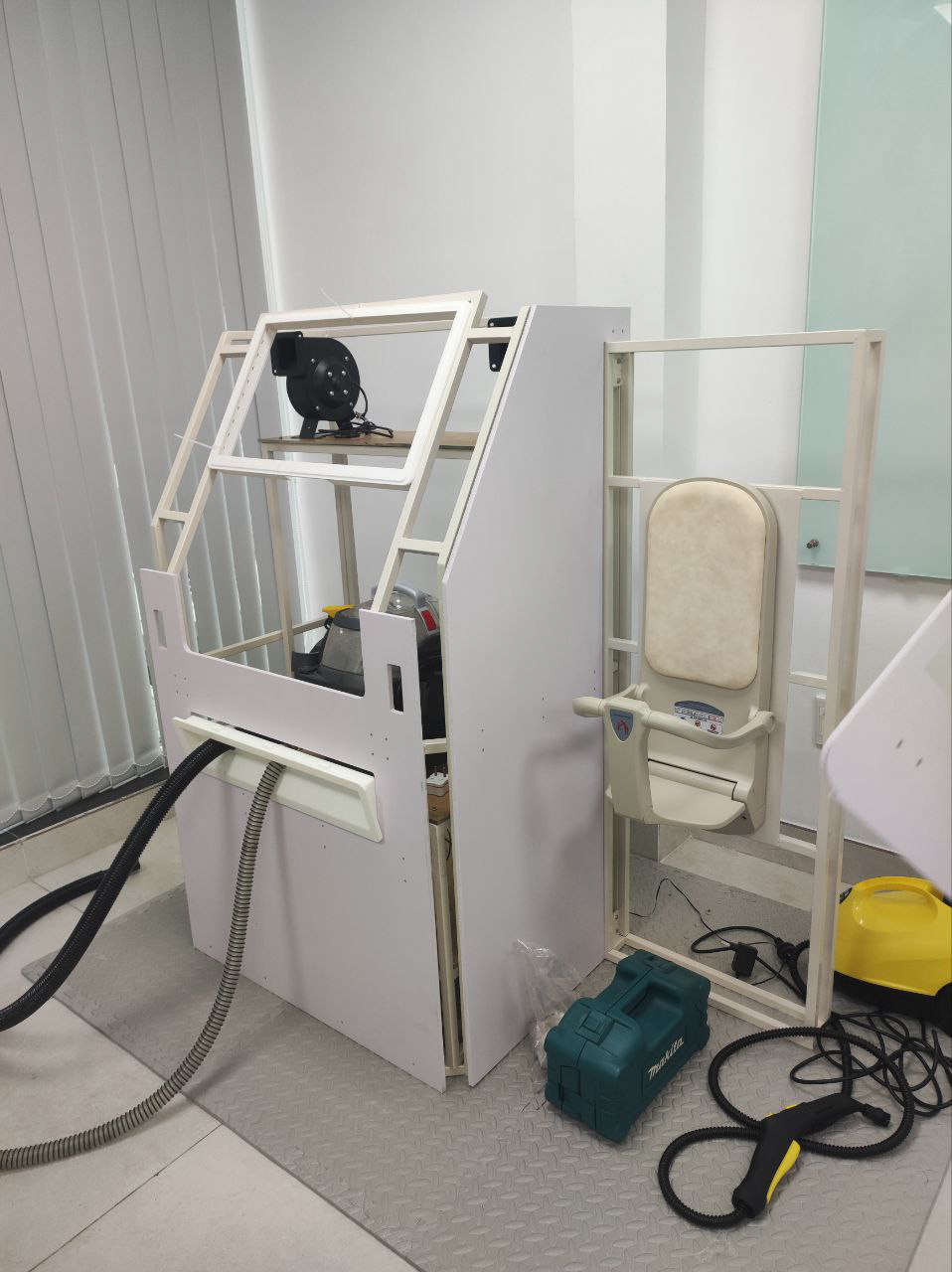
1:1 mock-up
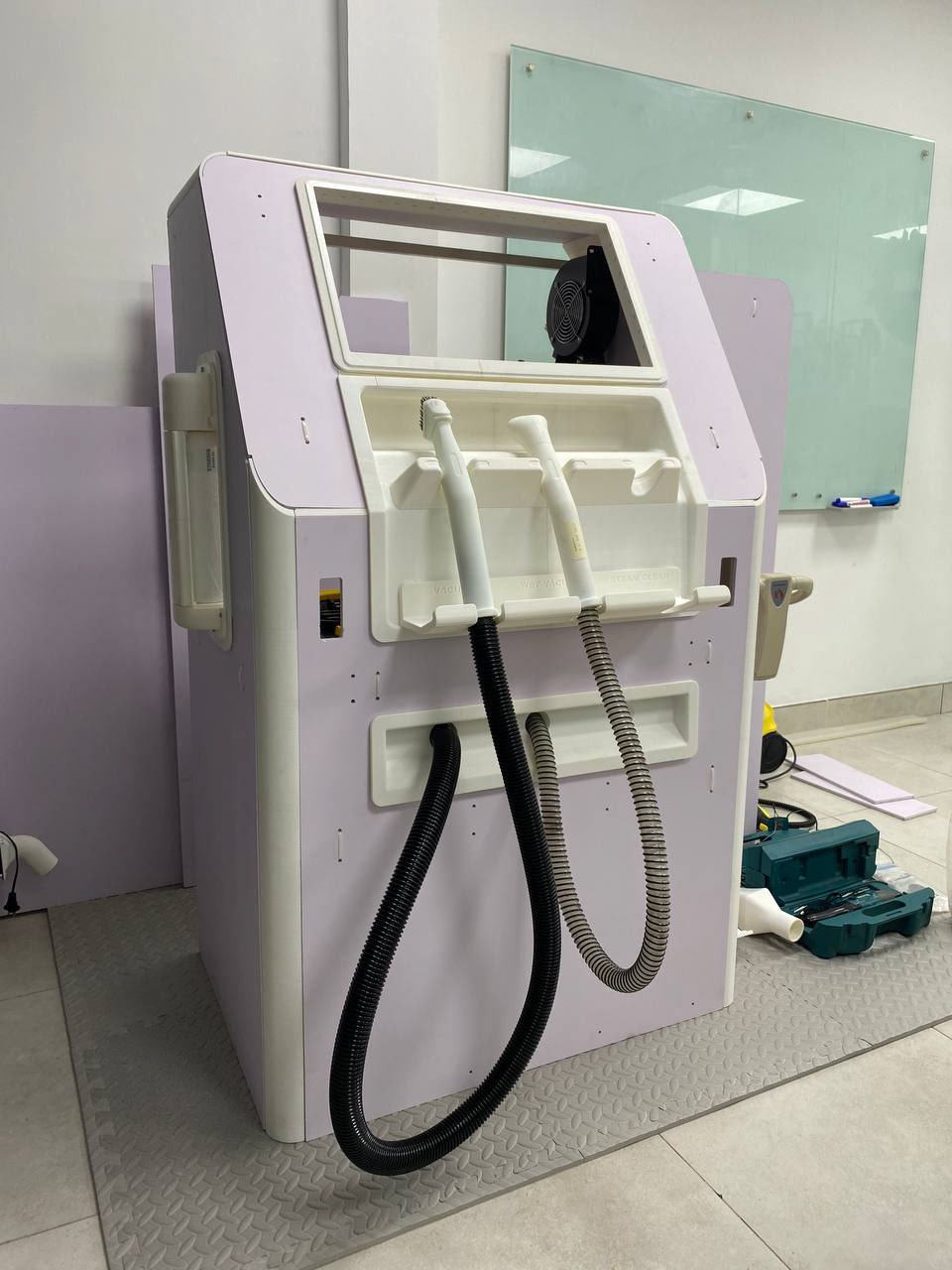
1:1 mock-up
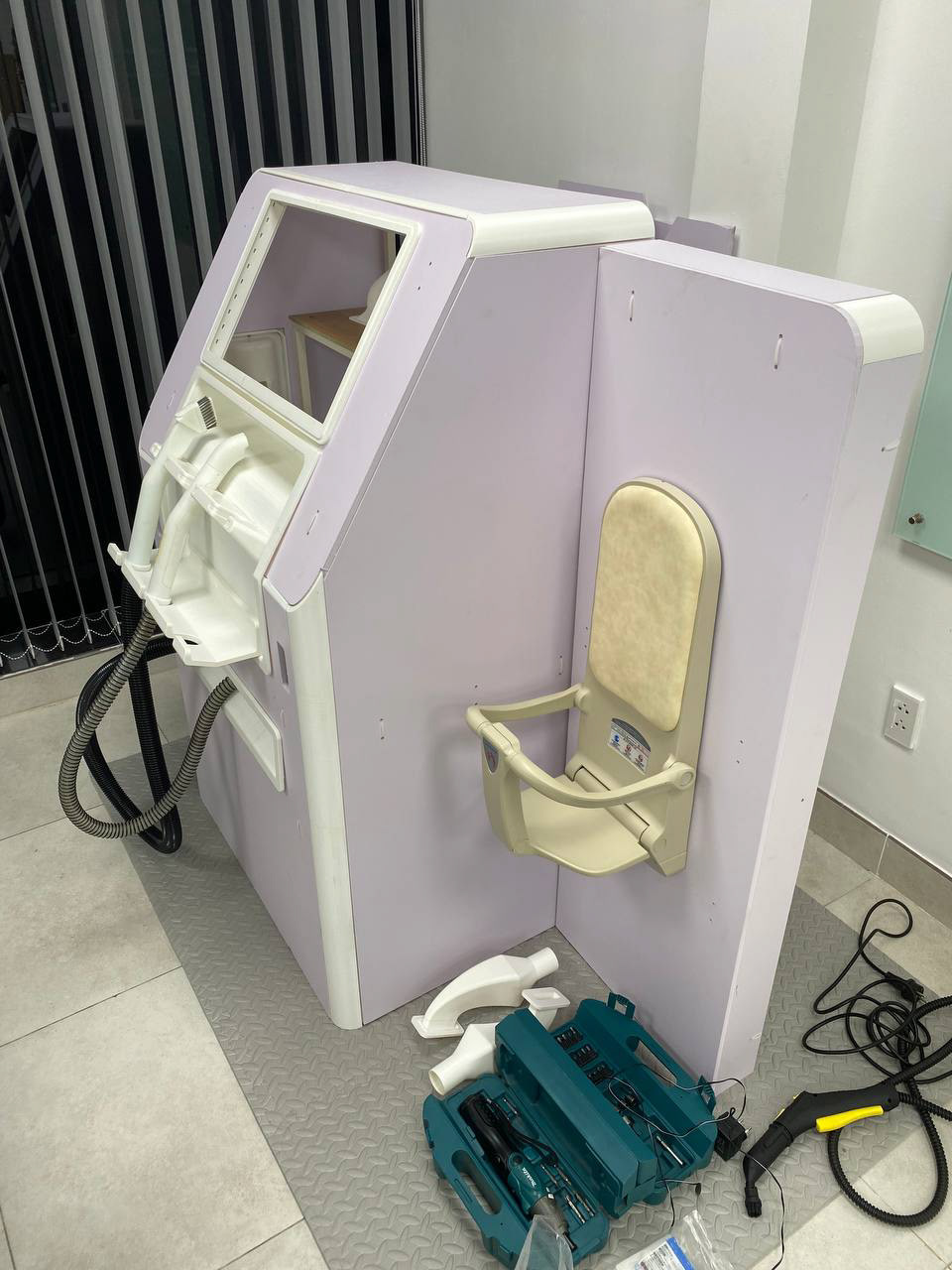
1:1 mock-up
Before moving toward more advanced prototype stages, the project also included full-scale mock-up exploration using paper and foam models. These mock-ups were important for evaluating proportions, functional placement, reach, accessibility, and the relationship between the machine body and the user in real space.
This stage helped test whether the design decisions worked physically, not only digitally.
Design Engineering and Integration
After the experimental and evaluation phase, the project moved further into design engineering and system integration.
The challenge here was not only to fit multiple functions into one machine, but to do so in a way that still felt coherent, compact, and usable. The development included work around component packaging, internal structural logic, cleaning-head development, arrangement of functional zones, acoustic isolation, and the relationship between performance requirements and overall form.
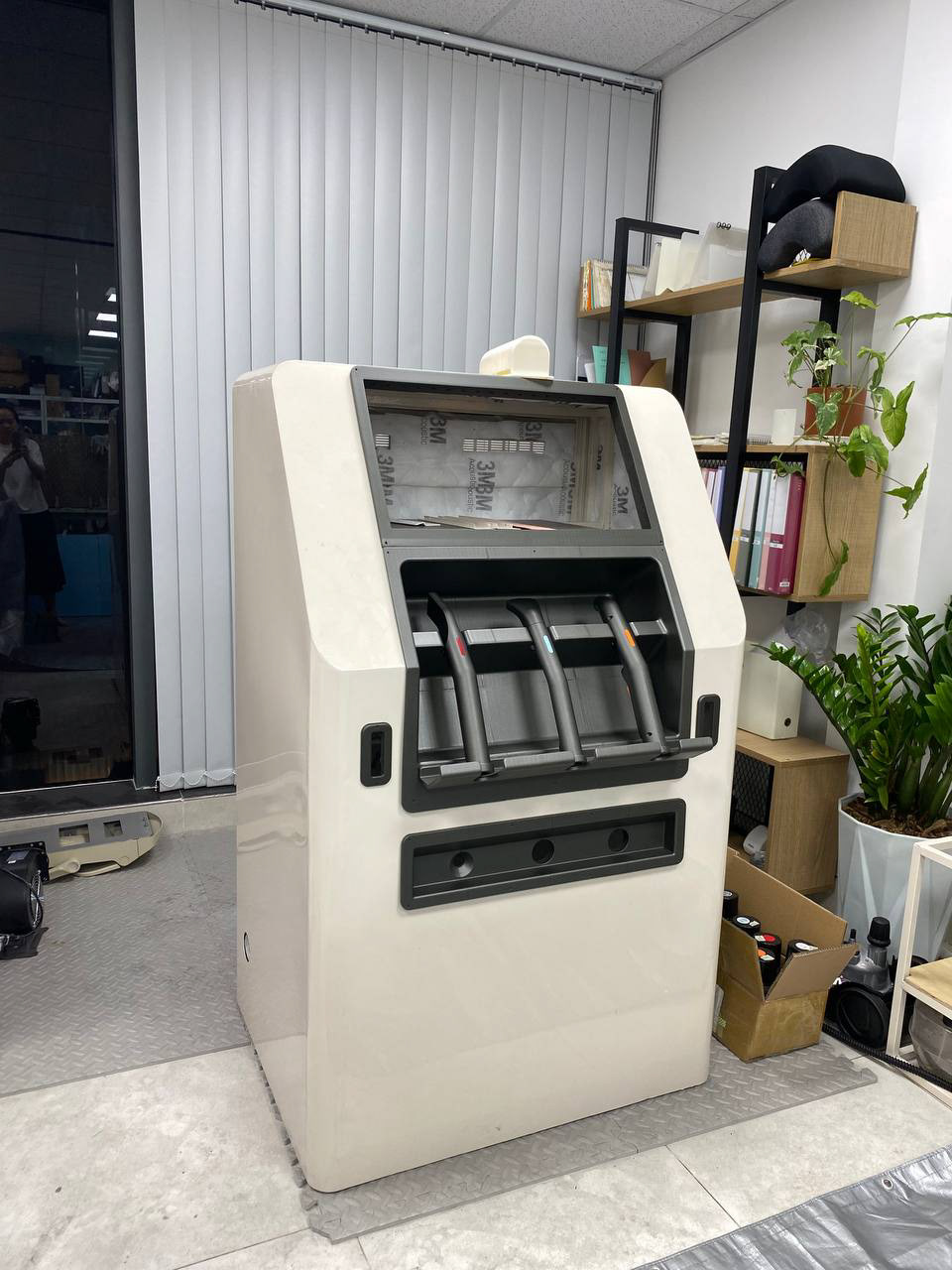
1:1 working prototype
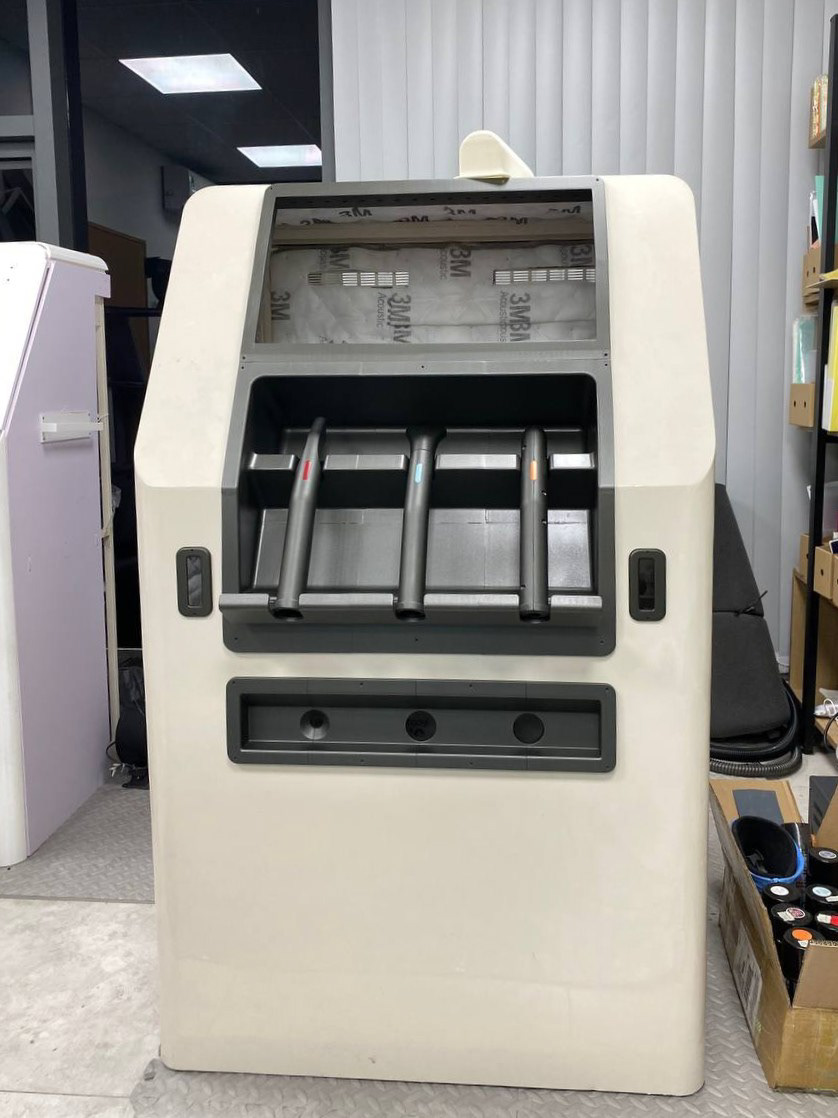
1:1 working prototype
This phase required deeper investigation into how existing technologies could be adapted and restructured into a single public-use product architecture. It was a process of translating separate cleaning mechanisms into one integrated system.
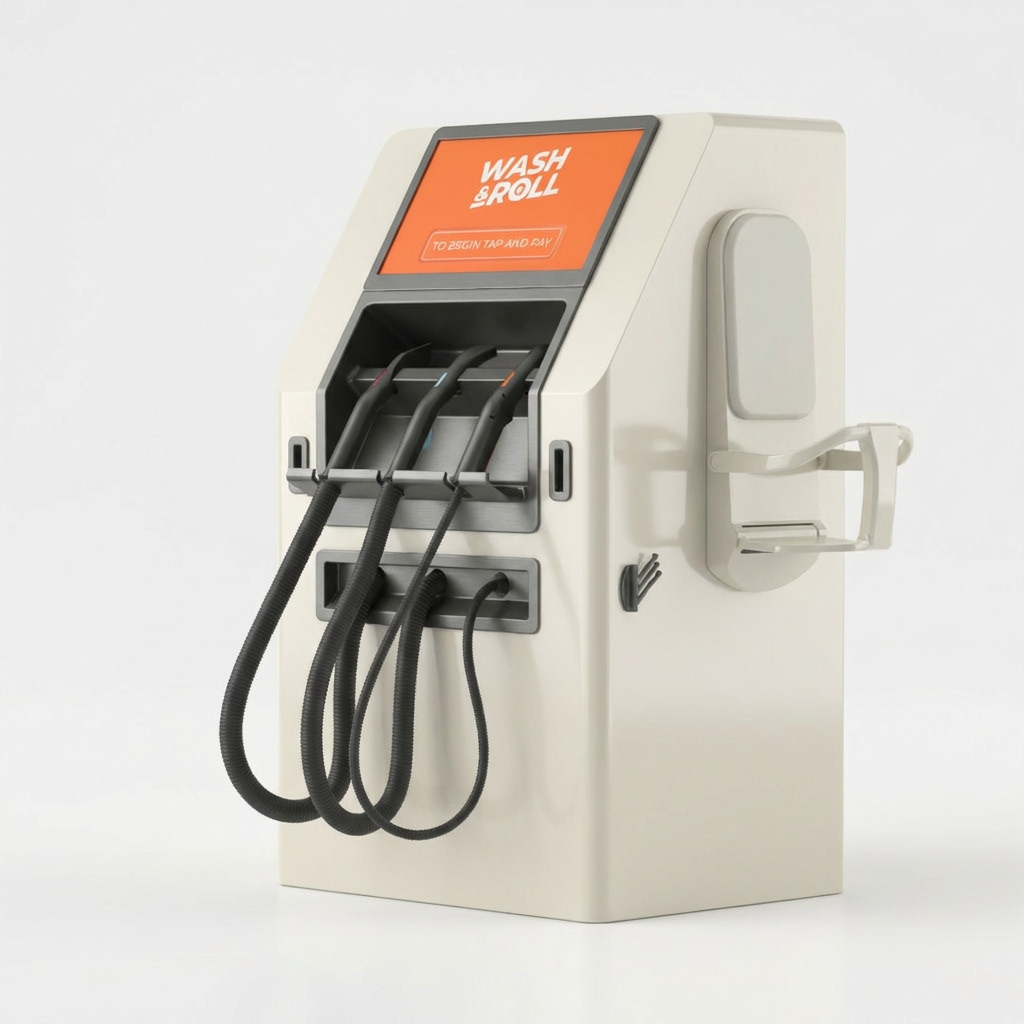
Outcome
Wash & Roll is not simply a machine designed to look clean and modern. It is a project built around the idea of making an inconvenient maintenance task feel easier, clearer, quieter, and more manageable in everyday life.
The final concept reflects a process that moved through observation, testing, revision, and integration. It combines industrial design, engineering thinking, ergonomic consideration, and real-use experimentation to create a public-use cleaning station that is both practical and experience-driven.
investment pitching video
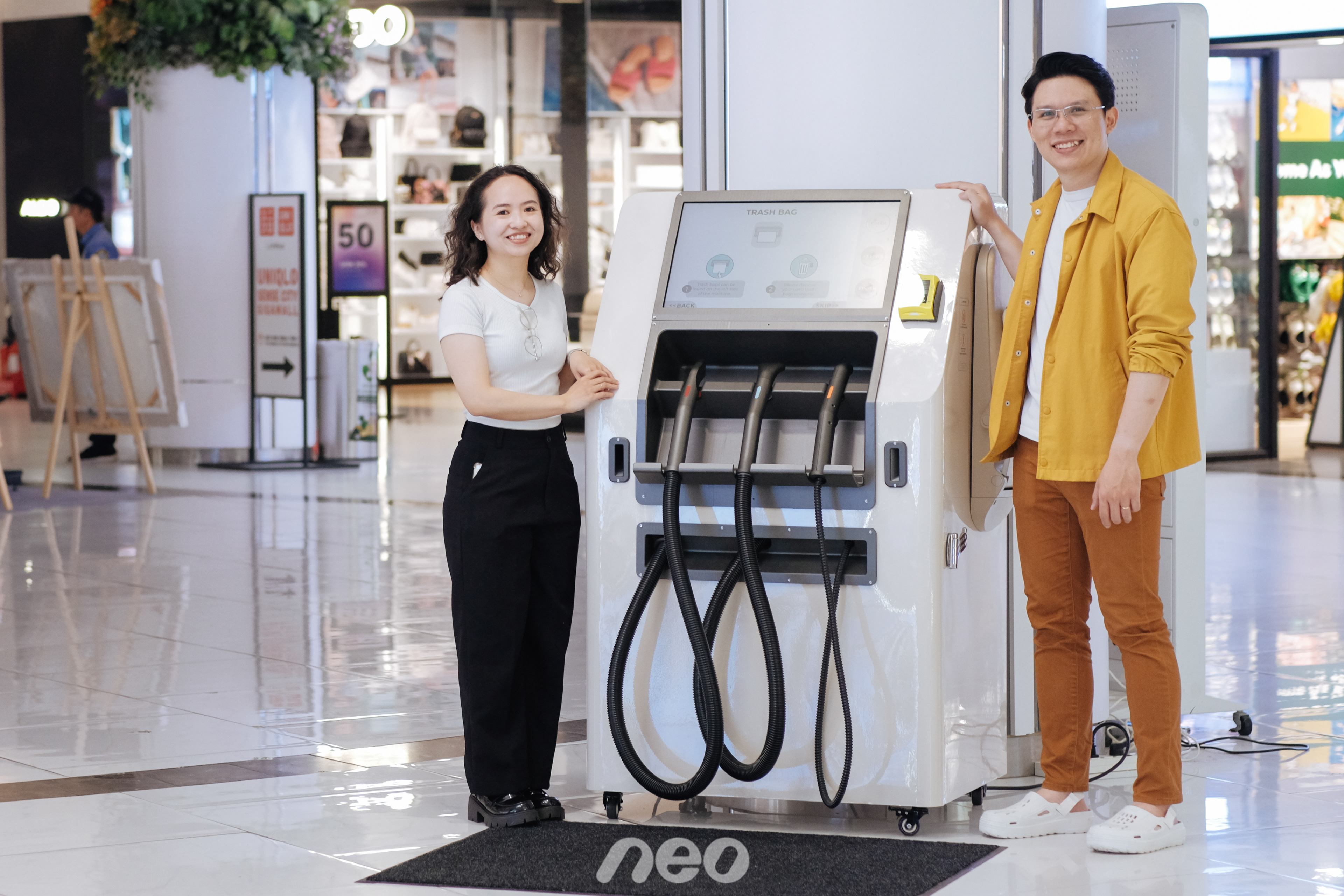
(right) Neo Nguyen - Lead Industrial Design, and (left) Clover Pham - Lead Product Design & Project Manager
Project Review
"Over the past year we've been working with NEO Studio to build our Wash & Roll prototype. From the initial consultation to the final product, the team's professionalism, expertise and creativity was evident at every stage. They took the time to understand our vision and brought it to life with innovative ideas and creative design solutions. Their ability to merge functionality with aesthetics is impressive, resulting in an end product that not only looks good but most importantly does the job it was designed for.
Throughout the project all communication was clear and consistent. When it came to our feedback, it was valued and incorporated into the design process, ensuring a collaborative approach. When direction or changes were made, however big or small, the team kept us informed and were always available to answer follow-up questions or discuss ideas further. Using Miro in the initial stages and then ClickUp to integrate tasks, enhanced visibility and helped maintain deadlines on each deliverable. This professionalism in managing the project's timelines gave us confidence that we were in capable hands.
As far as technical expertise, the team's skill level is great - especially in areas of industrial, electrical and manufacturing engineering, and of course product design. Latest technology and best practices were always considered to ensure the finished product was not only visually appealing but robust and intuitive for public use. The thought behind the end-users experience was particularly detailed with hours upon hours of rigorous testing of every single feature.
What was especially helpful was the team's willingness to go above and beyond, helping create the prototype visuals and collateral for the sales deck and webpage. As we were based in a different country and dealing with language barriers, this was something we could not have done without the NEO Studio team. It was heartwarming and motivating to see their excitement, positivity and pride in the end product when filming.
If you’re looking for a product design studio that combines creativity, industrial, electrical and manufacturing engineering expertise, and professionalism, look no further than NEO Studio. Our Wash & Roll team enjoyed collaborating with them on this prototype and look forward to working with them in the future to refine the design even further."
N. & M.